The ambient artist on the arresting simplicity of a song by Myriam Gendron
The premise of One Track Mind is pretty simple: I ask artists to pick one track that means a lot to them – either something they’ve discovered recently, something that’s been with them for years, or one that reminds them of a specific time in their life or career – and tell me what makes it so special to them. I get to talk to the artists I love, and they get to talk about the artists they love. Love all round!
Brad Deschamps, recording as anthéne, is a Canadian ambient composer whose work leans into stillness, tone and emotional weight. His music draws on soft drones, field recordings and minimal melodic fragments to build pieces that feel immersive without becoming overworked, with releases across labels such as Home Normal, Whitelabrecs and Past Inside the Present.
His latest release is a collaborative album with Alessio Bertuzzi aka Far Away Nebraska, great plains, which leans heavily into the ‘country ambient’ aesthetic, and has been a daily source of morning calm for me over the past several weeks.
For his One Track Mind, Brad has picked out a deeply meditative song from a celebrated Canadian musician and songwriter.
anthéne on Myriam Gendron – Solace
“Though I’m constantly seeking out and listening to new music, when I think of the last decade or so there are a few artists that really stick out as being extremely important to me. Myriam Gendron is one of them. Her discography is all so amazing, but this song “Solace” from Not So Deep As a Well is one that I return to very often. The guitar playing bares a passing similarity to another song I almost chose for this, “Sleepwalker” by Julie Byrne, (another one of those artists whose work I’ve spent a lot of time with in the last 10 years or so).
“The combination of her beautiful guitar playing and the words of Dorothy Parker is really arresting, and it’s also just a very novel idea to set Dorothy’s poetry to music. To me the song/poem seems to be about grief, letting yourself feel sadness and not trying to hastily move on:
There was a rose that faded young; I saw its shattered beauty hung Upon a broken stem. I heard them say, “What need to care With roses budding everywhere?” I did not answer them.
There was a bird, brought down to die; They said, “A hundred fill the sky- What reason to be sad?” There was a girl, whose lover fled; I did not wait, the while they said, “There’s many another lad.”
“Having seen her perform live a few times, her music on record and in person feels very warm and inviting despite being so minimal and somewhat somber, and I take great comfort in it. Perhaps most inspiring is this song is from Myriam’s first album, recorded alone in her apartment with no prior knowledge of sound engineering, and to have composed and recorded something this beautiful is really something.”
anthéne & Far Away Nebraska – great plains is out now on Home Normal
Written and recorded throughout the US West Coast, Maria BC’s new album Marathon is both expansive and intimate, ranging from aerial acoustic songs, to glitchy distorted tracks channeling chaos and disillusionment, all while maintaining a strong lyrical through line. “For this record I decided to spend less time on production and recording and more time on songwriting” she says. “The result, I think, is more thematically consistent, lyrically speaking, and more concise”. On first couple of listens, I agree.
And so begins the inevitable march of posting all the music from 2025 that I missed, starting with this beautiful, devastating track from Ethel Cain’s album Perverts. It doesn’t really do justice to listen to it in isolation from the rest of the album, but it is an undoubted highlight – if a ‘highlight’ can make you want to curl into a mournful little ball and never go outside again. Perverts is one of the bleakest, most sorrowful albums of the year, and I can’t stop listening to it.
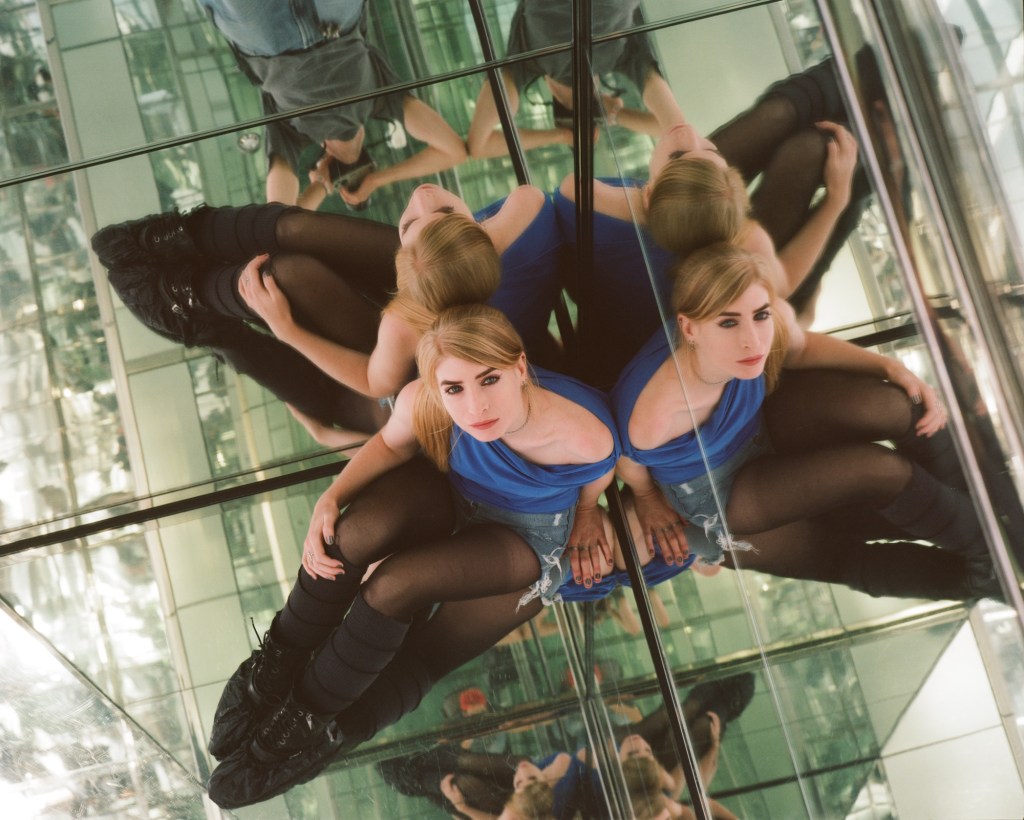
Kelly Moran is a composer, producer and performer working at the borders of minimalist electronics and extended piano technique. Classically trained, she came up studying 20th-century composition and prepared piano, later folding synthesis, generative sequencing and computer processing into her writing. Her connection to machines deepened through time spent with the Yamaha Disklavier and Disklavier-connected environments, where the instrument’s automated precision shaped her sense of space, decay and restraint
Her latest LP Don’t Trust Mirrors arrived in October 2025 on Warp Records, a meditation on distortion as both sound design and self-portrait. A club-leaning companion to 2024’s Moves in the Field, the album’s palette grew from prepared piano, live electronics, and Moran’s custom Disklavier arrangements, but its inspiration was interpersonal reflection rather than technical display.
In our interview she talks about those parallel selves: the touring hedonic performer and the quieter, post-lockdown writer at home. We also discussed a pivotal moment at Approximation Festival in Düsseldorf in which Moran challenged the festival’s attempt to draw a line between politics and art, her account of which speaks to the wider pressures artists now carry: hyper-visibility expectations on platforms like Instagram, algorithmic penalties for political speech, and a media landscape reshaped by layoffs, inflation, and AI saturation.
You wrote some of the earliest Don’t Trust Mirrors pieces while partying through festivals, then finished the project in a much quieter, post-lockdown reality. When you play this material now, which version of yourself do you feel closest to: the hedonistic touring mode, or the person stuck at home trying to reimagine everything?
Honestly, these are the two wolves that live inside me at all times. But I think I feel way closer to the touring hedonist when I’m performing the material because being on stage always gives you a huge confidence boost that is super energizing and it reminds me why I made this music to begin with.
You have talked about how sensitive you are to a room’s energy, right down to when you lift the pedal or stretch a phrase. Has there been a recent show where the way people were listening actually changed the shape or pacing of a Don’t Trust Mirrors piece in the moment?
Not for these pieces in particular – whenever I perform material from Don’t Trust Mirrors, I’m maneuvering between electronics and a keyboard (or a piano) and everything is mostly locked in place. These pacing changes tend to come when I’m performing solo piano music because there’s no coordination with outside musical elements, and I can be as loose as I like. At my album release show a few weeks ago in NYC, I was feeling the room’s energy very intently as I was playing some pieces by Ryuichi Sakamoto to close out my set. I could tell how quiet and focused the audience was, and it made me move through the sections of the pieces super deliberately and slowly. I took really long breaks between sections to let the notes decay because I could sense how attentive the audience was hanging onto every note, and it was really beautiful to be able to savor the music with them in this way.
You have said the Disklavier taught you a lot about restraint, and you were learning Sakamoto’s music at the same time as watching horrific news unfold in Gaza. How much of that climate, political and emotional, do you hear back in Don’t Trust Mirrors when you listen now?
I don’t hear it in my own music as much as I feel it in Sakamoto’s – simply because the genocide in Gaza began during the month I was learning all of Sakamoto’s music. His music is deeply delicate and requires a lot of restraint and sensitivity, so it was a massive contrast to go from watching these horrific, violent scenes unfold and then going to the studio to immerse myself in this super gentle music. It helped me process a lot of what I was seeing and made me want to be a more kind and gentle person in the face of these horrors.
This brings us to Approximation Festival in Düsseldorf. You were invited by Hauschka, and you’d admired him for a long time.
Yes. I discovered his music when I was in college and exploring prepared piano. When I saw him perform in New York in 2017, I actually waited after the show and gave him one of my CDs. So years later, being invited to play his festival felt meaningful. This was during the period when I had already been speaking about Palestine at all of my shows. A few days before, I emailed the festival team to say I speak about Palestine during my set, and Volker replied saying that the stage was reserved for art only and that the festival was not a place for politics.
I responded saying that I don’t believe that art and politics are separable. That we are always creating work inside a shared reality. And that, for me, as an American whose tax dollars are directly funding what’s happening, speaking is a moral necessity. We went back and forth. Eventually we agreed that instead of a full political statement, I would simply dedicate the remaining pieces in my set to the children of Gaza.
I played my set, and then when it came time to speak, I thanked the festival, I said I admired Volker’s music, I explained how I had been recording Sakamoto’s pieces at the same time the assault on Gaza intensified, and how that music represented a way to stay soft and open in the face of horror. I dedicated the rest of the performance to the children of Gaza. And then, very quietly, because my whole body was shaking, I said, Free Palestine. I did not shout it. My voice was barely above a whisper. And the audience erupted. People came up to me after the show and came to the merch table to thank me. The feeling in the room was one of recognition.
But the next day a local newspaper published an article saying that I shouted anti-semitic statements. It claimed that the audience fell silent. It claimed that the atmosphere was uncomfortable. It claimed Volker condemned me and said I had broken an agreement. They used the phrase anti-semitic repeatedly. What struck me was how deliberate the framing was. It was not confusion. It was not misunderstanding. It was narrative management. It was a rewriting of the event to align with an institutional position.
You have spoken about feeling awkward on Instagram Live and being asked to “show people peeks into your life.” What has your own experience of this cycle been, where the industry expects hyper-visibility while your practice is built on long, private hours with an instrument?
I used to be very flippant and casual about posting on social media, then I got signed to Warp and I got way more self conscious about how I was perceived. I almost felt like I didn’t know what people wanted from me – am I supposed to be mysterious and inaccessible, or should I be down to earth and share everything? I tend to be a pretty open person in real life and wear my heart on my sleeve, but I struggled maintaining that once I had a spotlight on me post-Warp. And I think COVID also made everyone more self-conscious about how to relate to other people, and I’m still figuring out the best way to do that on my platforms. I remember making a separate instagram for my cat after I got signed because I thought, well, it’s time to be more serious about making my accounts focus on my music! But people actually LOVE seeing my cat and glimpses into my day-to-day life, so I’ve been trying not to overthink so much and just post what I feel like. I just did a “day in the life” video for bandcamp’s instagram, and I was low-key horrified at how embarrassing my video turned out – as though I think my life is interesting enough to do this kind of influencer content! – but I got an insane amount of DMs of people saying they loved seeing what a day in my life was like and how charming it was. I think the best advice is just not to overthink everything! Very few people are going to remember what you posted on instagram last week, or even yesterday!
How have label conversations, booking pressures, or expectations about “what a Kelly Moran record should sound like” shaped the choices you did or did not make on Don’t Trust Mirrors?
Warp has never made me feel like I need to have a certain sound and have been very encouraging to me about following my creative instincts. But I will say that making a record after you’re signed to a label is a much different experience than making a record and then getting signed. When I made Ultraviolet, I didn’t really have any concrete hopes or expectations because I was just following a really potent creative idea and not thinking about how it would be received since I didn’t know where the project was headed – I didn’t have a label or a team. Warp heard the record and wanted to put it out, so that was a nice surprise after all that hard work! But now, I am acutely aware of the fact that the music I make will be released on Warp Records, and that is a lot more pressure than I’ve ever felt. It’s not necessarily coming from them, it’s more coming from myself because I have a great opportunity and want to make the most of it. But it is a lot harder knowing that what I’m working on will be part of this collection with really high standards and a very critical fanbase. I have trouble turning off that awareness when I’m making music now!
From where you sit, what feels like the hardest part of being a working musician right now? Not in the abstract, but in the very real day-to-day sense of trying to make art, pay rent, and stay sane inside an industry that often feels unstable at every level?
You just summed it up – it’s actually hard to stay sane in an industry that feels unstable at every level! For me, the hardest thing is not losing hope and giving up – simply because there are so many challenges on every level. The industry has completely changed in the last 7 years. There are fewer press opportunities since so many publications have shuttered and laid off staff. Inflation has made touring more difficult since costs have gone up. It feels like you have to constantly adapt to these changes and it’s really hard. Sometimes the music industry feels like a sick game where the goalposts are always moving. Like, we’ve been bitching about how unfair streaming is for years, but now it’s worse because we have to compete with AI artists. There is just so much slop on the internet that you have to compete with to be seen, and that is fucking hard!
Recently a lot of artists and I have been talking to each other about how the instagram algorithms are fucking us over and how difficult it is to get our audiences to actually see the work we post. That is insanely frustrating because we rely on these platforms to spread the word about our work, and the algorithms are always changing. There’s all these weird rules you are supposed to follow for better engagement and if you don’t follow them, instagram will penalize you. And if you post about politics you will get shadow banned. So, stuff like that is really frustrating because it feels harder and harder to reach your audience and potential fans! There’s kind of this expectation that you have to post lots of different content – reels, carousels, stories, ETC! – and that is a lot of fucking work to do, it’s like a whole separate job in addition to making art.
Anyway – I can go on and on about other things that make it hard, but I’ve been thinking about the above lately because I have to use social media to promote my work.
When the work is this intricate and emotionally loaded, what actually helps you switch off? Do you have a way of coming down from the intensity of writing, rehearsing, or touring that doesn’t pull you back into thinking about the music?
One of my greatest creature comforts is watching reality tv with my cat Wendy. It is strangely comforting and grounding to me to watch reality slop. I usually watch an episode of Survivor or Real Housewives before going to sleep. It’s a level of escapism that has nothing to do with art or music, it’s the ultimate way to switch off my brain and not think about any creative work!
Having pushed this material through two albums, a tour, and a whole visual world, where is your curiosity pulling you next? Are you already working on something that deliberately steps away from the piano, or is the next phase about going even deeper into this instrument and its electronics?
I’ve actually been thinking a lot about how I can better integrate electronics/synth with the sound of un-prepared piano. Don’t Trust Mirrors centered around prepared piano with electronics, and Moves in the Field didn’t have any electronics combined with the piano aside from sub-bass, so part of me has been curious about how my music will sound if I merge my synth tendencies with a cleaner piano sound. I also want to collaborate with other artists on my next album – I’ve been weirdly controlling about not having many collaborators on my solo albums, but I think I should be more open minded and see how my music transforms when I let other people in because the collaboration I did with Bibio on Don’t Trust Mirrors has turned out to be one of my favorite pieces ever. Stay tuned!
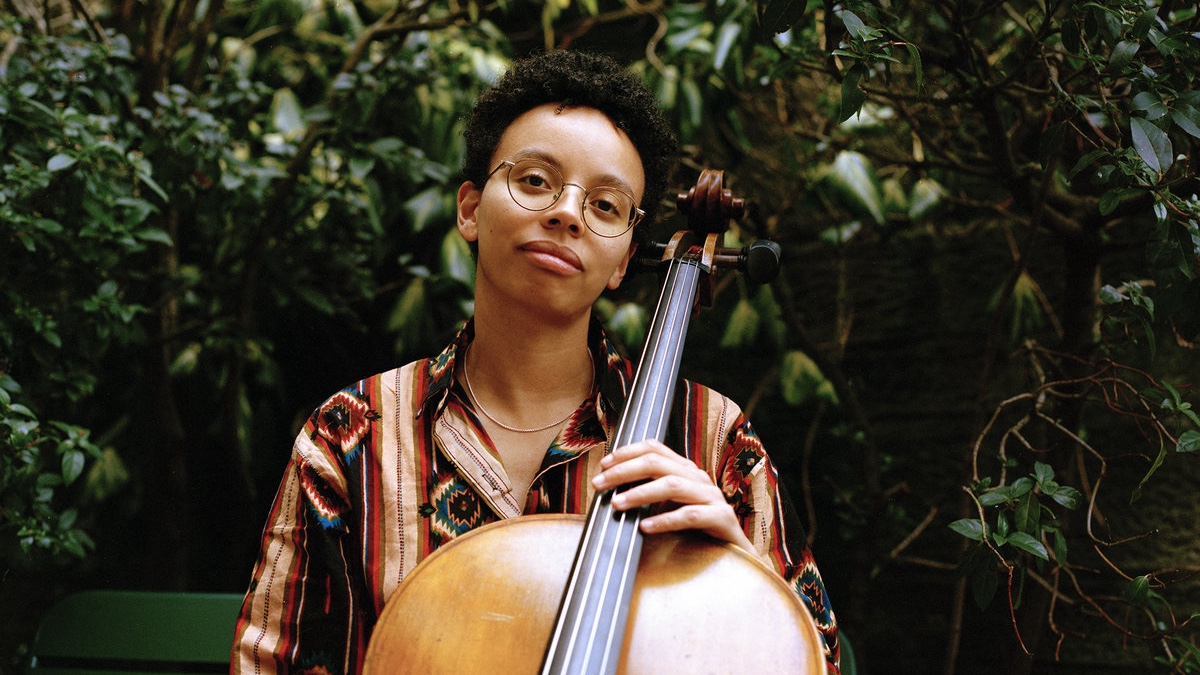
I really was intending to post something bouncy and uplifting to start the week, but then I heard Simone Seales new album Dearest and decided reflective, somewhat mournful cello was actually the way to go. Simone Seales’s debut studio album is a poetry-music album inspired by the warmth, nostalgia, and tension of first queer love which they wrote as a way of honouring and releasing their first relationship from a decade ago. So not bouncy, exactly, just very good.
A Warm Static Sphere sees TPW favourite 36 in ultra-deep mode – vast and immersive synths mesh with opaque waves of noise which give way to more delicate moments and open up to reveal fragments and minutiae buried in the depths. The press notes describe the album as “truly horizontal music”, and while I’m not entirely sure what that means, it definitely makes me want to lie down. In a good way.
The title of Corrina Repp’s new LP, ACTIVITY DREAM: Instrumentals on the guitar Vol. 1, tells you everything you need to know. It’s beautiful, fragile music, ripe with wonder and yearning. There’s also a 36 page photo book that accompanies the release, described by Repp as full of “perfect accidents I feel lucky enough to witness.”
Simple Things has quietly become one of the UK’s best city festivals. Now in its 11th year, it’s grown into something that feels both expansive and rooted, spread across Bristol’s best venues, full of artists who aren’t afraid to stretch sound into new places. This year’s edition contained a mix of brilliance, occasional frustration, and some of the most viscerally affecting performances I’ve ever witnessed.
I started 10 hours of pretty much back-to-back sets with Rachika Nayar and Nina Keith’s collaborative project Disinblud at Lantern Hall, which ended up being one of the day’s most impressive. That room always sounds incredible and it suited them perfectly. The set moved from soft, gentle melodies across piano and guitar to total walls of sound and deep, rumbling basslines, with huge emotional range and perfect control. The combination of the two of them felt inspired: a proper meeting of minds. The collaboration draws on themes of transformation, loss, and beauty in chaos, and live it came across as something vast in one respect but deeply human in another.
Rachika Nayar and Nina Keith
With the bar set high, Lucy Gooch followed in Strange Brew’s second room. Her album, Desert Window, is one of my favourites of the year, but I’m not sure all that delicacy fully translated to the live setting. Some of the subtlety was lost in the sound, though when her vocal harmonies clicked, it sounded amazing, rich and luminous. There were flashes of the record’s dreamy majesty, even if the overall feel was a little unpolished.
Lucy Gooch
On the way to Léa Sen I caught a bit of Florence Sinclair’s set in Strange Brew’s main room which sadly struggled to attract much of a crowd. The performance itself was thoughtful and sincere, but it just never quite lifted. Léa Sen’s set at Rough Trade was a completely different experience. She’d played to 5,000 people the day before supporting Loyle Carner and said she actually felt more nervous because “you’re really listening”. Regardless of the truth of her nervousness, it did feel like that: seventy-odd people in a small room, totally tuned in. She played stripped-down versions of tracks from LEVELS, including Ghostwriter, where she talked about the difficulty of being bilingual and expressing herself properly. There were a couple of improvised moments too, just her and a guitar, with an occasional (slightly irritating) backing texture. Still, it felt like a privilege to see her in such an intimate setting.
Jawnino tested patience slightly, leaving us waiting fifteen minutes with his DJ before starting, not ideal given he only had a forty-five-minute slot. When it got going, though, the energy was there, with plenty of tracks from last year’s album 40 although I ended up heading off early to catch The Orielles.
That turned out to be the only real bust of the day. They started more than twenty minutes behind schedule due to technical issues, which still weren’t resolved when they finally began, with parts of the drummer’s kit totally inaudible, and (understandable) growing frustration on stage. It was hard to watch, especially as I’d been looking forward to their set. I’ve been a bit obsessed with their 2022 album Tableau recently, especially insanely brilliant The Improvisation 001, and was hoping for a big moment. Instead, it just never quite came together. Unfortunately, it wasn’t the last sound issue to hit Lantern Hall that day.
After that disappointment I got a quick coffee near the docks, sat looking out at the water, and thought how lucky I was to be at this festival. It really is amazing. I used to go out religiously (and exclusively) trance nights here, especially at the now-defunct club Creation, and I’ve stumbled around the area in some right old states. Now I was sitting there sober, drinking coffee and eating shortbread. Boring! But also very happy with it.
Kayla Painter played an audio-visual set at Bristol Megascreen, the IMAX-adjacent cinema venue. The space itself was impressive and the sound was beautiful, starting with chilled ambient and drone textures, full of natural noises like birds, shifting wind and the occasional hand-crinkled bit of plastic held up to a microphone. I thought the visuals felt a bit incongruent, like a ropey version of Tron, but the music held it together. When she picked up the tempo later with some more techno-leaning material, it was interesting, but I still preferred the earlier ambient sections.
Dry Cleaning
After a quick musical break to get some food – shoutout to Crispy Dosa, never disappoints – Dry Cleaning’s set was one I only caught part of, but it was clearly well attended. Honestly, I’m not a big fan at all, but they looked and sounded great for the most part, although I found it strange that Florence Shaw’s vocals, so distinctive and narrative-led, were totally lost in the mix. You could barely understand a word. If that was a creative decision, it’s an odd one; if not, a big missed opportunity. For me though, this was fine – the less I can hear about missing tortoises, the better.
And then, Blackhaine. Holy shit. His performance was easily the most memorable of the day, and maybe the most anxious I’ve ever felt at a gig. The opening few minutes were plagued by sound issues, which only added to the tension: it felt like they might genuinely attack people. The whole thing was an assault, choreographed chaos, physical, angry, and deeply affecting. His delivery was raw and cathartic, full of anguish. It reminded me of seeing The Haxan Cloak and Pharmakon years ago, the same visceral intensity, but this went even further. Also, he was flanked by two people on stage who mostly just stood there looking threatening, though one joined in with screamed vocals on a track. Absolutely brutal and totally incredible.
Joshua Idehen followed and could not have been more different. It was a huge vibe shift, full of positivity, warmth, and connection – the polar opposite of what just went down next door. His set took place in the Bridgehouse foyer at Bristol Beacon, which is a bit of a thoroughfarea, brightly lit, and not really a ‘venue’ in the strict sense, so I only stuck around for a bit.
From there I went to Clarke in Beacon Hall. Clarke has a few different modes: I’d seen him a few years ago touring A Playground in a Lake, which was deeply contemplative and melodic; electronic music to sit down to! This was a totally different story, straight into full-on rave mode from the start. I had to adjust my expectations, but once I did, it was great to just dance. So much of Simple Things leans into darker, more introspective sounds, so having that release felt well-earned.
Clarke
Jadu Heart closed the night in Lantern Hall. Thankfully all the sound issues from earlier in the day had disappeared: they sounded great and it seemed like there was real chemistry and affection on-stage. They played tracks from across their catalogue, including the two albums they recorded in Bristol, and ended with U, probably the finest moment from this year’s Post Heaven; a fittingly uplifting end to an immensely rewarding day.
I left feeling like Simple Things must be one of the best festivals in the UK for its size and scope. It’s rare to find something that still gives space to challenging, unpredictable music without trying to smooth out the edges. This year’s lineup moved confidently between discomfort and beauty, and the programming trusted the audience to stay open and curious. In a climate that might be the toughest for live music in decades, it felt genuinely heartening to see a festival still championing experimentation on this scale. Even with the odd hiccup, the value for money is crazy, and the spirit of it remains intact. I’ll be first in line for a ticket next year.
This is the first single from A Place In My Memory Is All I Have To Claim, the new album by Australian atmospheric pop trio Hydroplane. On it, their first music after two decades plus of radio silence, Andrew Withycombe, Kerrie Bolton and Bart Cummings return to the gentle, close-quarters musical world they shared around the turn of the century.
Hailing originally from Montenegro, but having long departed for stints living in London, Rome, Philadelphia and his current home Nicosia in Cyprus, Martel is a former architect who has turned to building dystopian and subversive soundscapes. After creating characteristically atmospheric tracks for film and theatre, he’s launched his own Evil Ideas label and has just released ‘The Ghost’, a super-detailed techno cut that layers Dozzy-esque polyrhythms with hand-played percussion and synthetic textures. The full Zaire EP will be landing on vinyl later this year.








 The Predatory Wasp