Categories
Features Music

Opinion: Music, Fashion, Film is the year’s most ludicrously overrated album

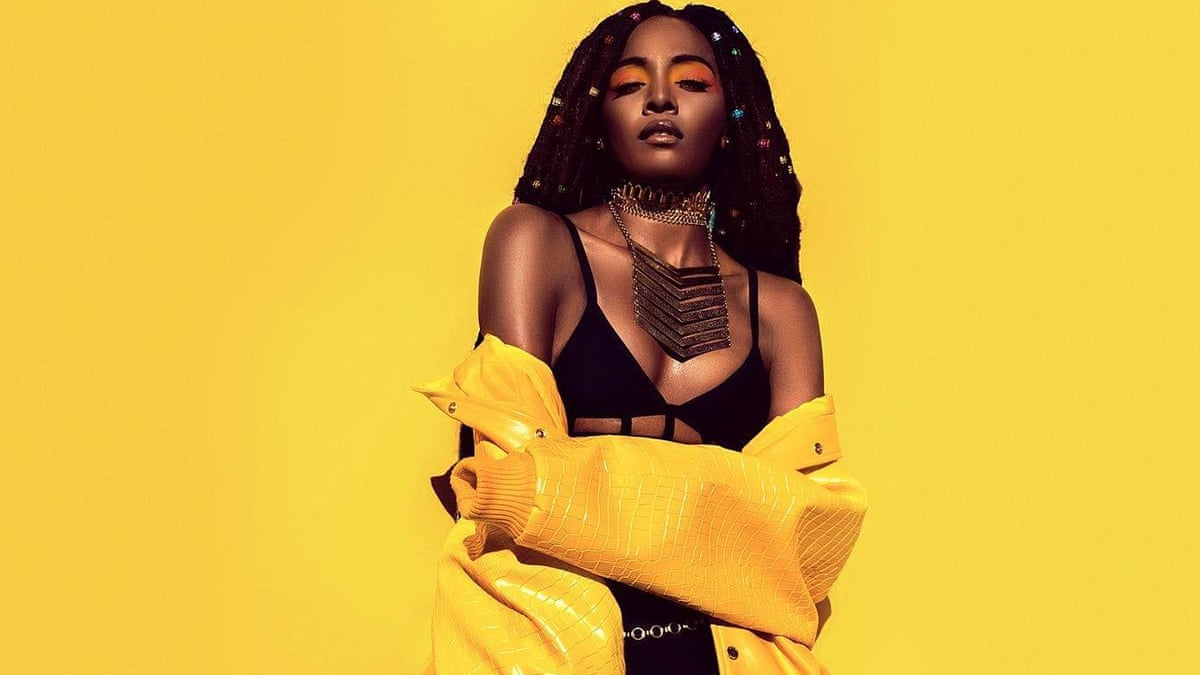
I don’t think I’ve ever listened to an album that has made me question contemporary music criticism quite as much as Charli XCX’s Music, Fashion, Film. I’m four listens in, and I just can’t do any more.

It’s not just because I dislike it. There are plenty of critically acclaimed records that simply aren’t for me, and that’s never particularly interesting. This feels different as it’s one of those rare occasions where I genuinely find myself wondering whether everyone else is hearing something that simply isn’t there, or whether we’ve reached the point where the narrative around an artist has become so compelling that it no longer really matters what’s coming out of the speakers.

I come at this from the position of being a fan, especially of what could loosely be described as her mid-period. Number 1 Angel is still my favourite album of hers, which I guess immediately opens up to criticisms of “not properly getting it”, as it’s far from her most critically lauded album. But I was fully on board for Pop 2 and most of that which followed, and think Wuthering Heights is one of the year’s best albums. But Music, Fashion, Film is just a bad album.

The reviews have been extraordinary. The Guardian described it as “another gorgeously astute and disarmingly deep album about the instability of identity”, adding that it “hits just as hard as Brat. ” Pitchfork, awarding it Best New Music, celebrated what it called the album’s “first-draft, ‘one for me’ feeling”, effectively arguing that the very qualities which might once have been criticised as unfinished are, in fact, central to its brilliance. Elsewhere, the Associated Press praised Charli as “one of pop’s great contrarians”, presenting the record’s refusal to meet expectations as evidence of its artistic success rather than something that should necessarily be judged on its own terms. Even the notoriously hard to please The Quietus argued the case that it might be “the best punk album of the decade”.

I mean, actually listen to this song and try and judge it free from all the narrative that surrounds it.

This is where I start to lose the plot and begin ranting on a very small blog that barely anyone will read. Because there seems to be an assumption running through so much of the coverage that intention is enough. If something sounds slight, that’s because it’s rejecting excess. If a chorus never really arrives, it’s dismantling pop convention. If the songwriting feels undercooked and sarcastic, that’s because the whole thing is deliberately exposing the artifice of songwriting itself. Every possible criticism already has an answer built into it, and that answer is almost always some variation of: that’s the point.

But what if, actually, this isn’t the point, or perhaps more importantly, what if it is, and it still doesn’t matter?

I’ve never really understood why irony is treated as some kind of artistic forcefield. If I deliberately paint a boring painting, I’ve still painted a boring painting. If I intentionally write an uninteresting song, it doesn’t become interesting simply because I anticipated that criticism. At some point the work has to stand on its own, rather than on the explanatory framework that’s built around it afterwards.

I think that’s what fascinates/riles me most about this album. Strip away the essays about identity, celebrity, self-parody, performance and deconstruction, stop reading interviews about rejecting the expectations created by Brat, forget the idea that Charli is one of contemporary pop’s great disruptors for a moment, and just sit with the songs. I keep coming back to the same conclusion: they’re just very boring! Not challenging. Not confrontational. Just… a bit dull. And sticking three auteurs looking serious on the cover doesn’t change that.

Are we genuinely all saying that this:

Is better than this?

All of this makes me wonder whether Charli XCX has reached that weird point in an artist’s career where critics have become more interested in interpreting the work than evaluating it. Every great artist eventually acquires a mythology, and mythology has a habit of bending criticism around itself. Choices that might look lazy in another context become fearless. Incompleteness becomes vulnerability. Ordinary ideas become conceptual statements. Before long, the discussion has drifted so far away from the experience of actually listening to the record that the music itself almost feels incidental.

None of this is to suggest that reviewers are being dishonest. I don’t think they are. I think they really are (somehow) hearing all of these things, just as I genuinely don’t. But I do think there are moments in criticism where consensus becomes self-reinforcing, where everyone is so busy engaging with the cultural significance of an album that they forget to ask the oldest and simplest question in criticism: Is it actually any good? And to that I say an emphatic: no, no it isn’t.

For me, Music, Fashion, Film never clears that most basic of hurdles. It feels like a collection of sketches that have been elevated into something profound largely because of who made them, and because we’ve collectively decided that every left turn Charli XCX takes must, almost by definition, be an important one.

Maybe time will prove me spectacularly wrong. Perhaps in ten years’ time this will be regarded as another pivotal moment in pop music, and I’ll happily concede that I missed it.

Or perhaps we’ll all look back slightly sheepishly and realise that, somewhere along the way, we became so captivated by the idea of what the album represented that we stopped noticing how little there was to hold onto once the record actually started playing. Perhaps Pitchfork will do one of those excruciating mea culpas and shave 4 points of her score alongside a “sorry guys, we got caught up in this one”. We can but hope.

My fantasy is that in six months time, Charli will issue some kind of “gotcha” statement: “Lolz this was shit and you all loved it ha ha idiots”. But she’s too smart for that. Maybe she’s thinking it though. That would be enough for me for now.

Categories
Music

Danny L Harle & Doss – C’Mon

There’s a whole lot of interesting music out today, but I spent the morning listening to Sasha & Digweed’s seminal Northern Exposure mix which everyone’s currently losing their minds about thanks to the recently announced 30th anniversary Redux edition, so I’m perhaps more even open to progressive, trancey offerings than usual. Step forward Danny L Harle and his new Crystallise Divergence EP, which includes this floaty little gem in collaboration with Doss.

https://dannylharle.bandcamp.com/album/crystallise-divergence

Categories
Music

Helado Tropical – Déjate Caer

Helado Negro and Reyna Tropical’s collaborative project is described in the extensive press notes as feeling like “the summer sun’s warmth on a Sunday”, and that’s pretty much all you need to know about this joyful new album to decide whether you’re on board or not. There’s a whole lot more that suggests ChatGPT was given a little too much freedom – “the project functions as both creation and documentation” (yikes) – but as the album clocks in at a breezy 29 minutes you’d probably be quicker just diving in and making your own mind up.

https://heladotropical.bandcamp.com/album/helado-tropical

Categories
Music

Function – City of Luz

Functions’s new LP Aeternum (Existenz) brings to a close a body of work that began with 2019’s Existenz. Written between 2016 and 2019 during an intensely productive period in the studio, the six-track release explores ideas of transformation and renewal, taking inspiration from the seven stages of alchemy. It also serves as a tribute to Sumner’s friend and longtime collaborator John Mendez aka Silent Servant. If there’s a track that encapsulates the record’s atmosphere, it’s City Of Luz. Running for close to 13 minutes, layers of synth and texture gradually emerge before dissolving again, sitting somewhere between ambient electronics and hypnotic techno. Just how I like it.

https://function-inf-ny.bandcamp.com/album/aeternum-existenz

Categories
Music

Sova – Quarry

Originally sketched more than ten years ago before finally being completed, the new single from Sova (AKA Sophia Subbayya Vastek) is built around looping piano, warm woodwinds and subtle electronic textures that constantly evolve, and calls to mind work from another prepared piano devotee, Kelly Moran. It’s taken from Sova’s forthcoming album Alight!, due on 4 September via Hout Records, with contributions from Clarice Jensen, Chuck Johnson, Spencer Zahn and others.

https://sophiavastek.bandcamp.com/album/alight

Categories
Music

Avi Engel – Garden of Earthly Delights

Avi Engel has shared ‘Garden Of Earthly Delights’, the first single from forthcoming album Seedhead. Taking its name from Hieronymus Bosch’s feverish vision of paradise, earthly pleasure and damnation, the seven-minute track opens with lyrics that immediately sets out its stall: “Slithering star, coruscant worm / burrowing deep in the guts of the earth / I’m cold / and I want to go home”. So far, so harrowing.

From there it unfolds slowly and sparsely, drawing together experimental art song, folk, chamber music and ethereal wave into something stunning, pastoral and bleak. Strings hover around Engel’s voice as themes of climate change, ecological grief and eco-horror emerge through strange, mystical poetry. Beautiful, unsettling music for a world that feels increasingly so.

https://aviengel.bandcamp.com/album/seedhead

Categories
Music

2K88, Lauren Duffus, Rainy Miller, Bianca Scout – Salto

A frankly ludicrous amount of talent combines for Everything Always Changes, For We’re Truly Here, a collaborative LP from four of the most boundary-pushing electronic and experimental artists working today. Cult Polish producer Przemysław Jankowiak, aka 2K88, brings together Rainy Miller, Lauren Duffus and Bianca Scout, creating a dreamlike album blending R&B, ambient electronics and fragmented vocals, inspired by the slow, dreamlike dance at the heart of the Polish film Salto.

https://fixedabode.bandcamp.com/album/everything-always-changes-for-we-re-truly-here

Categories
Uncategorized

36 – 105.5 Wacky Fm

I’m biased of course I as pretty much love everything that 36 does, but I do think that even among a discography of almost pathological prolificness and quality, his latest album stands out as one of his very best.

Hardcore, Static: Pirate Transmissions From The North Of England, 1990-1994 is Dennis’s celebration of a unique period in the UK’s musical history, when primitive pirate stations run by enthusiastic kids delivered a continuous stream of experimental sounds to Bradford, Leeds, and the surrounding towns of West Yorkshire. Spread across four expansive tracks blending fragments of ambient, drone, jungle, uk hardcore and peppered with the spectral voices of long forgotten pirate DJs, the result is utterly compelling.

https://auxiliary.bandcamp.com/album/hardcore-static-pirate-transmissions-from-the-north-of-england-1990-1994

Categories
Music

Anthony Calonico – Gray Glow

This is taken from Spacious Heart the debut solo album from Los Angeles-based musician Anthony Calonico who I was introduced to last year through his work as part of the trio Total Blue. Spacious Heart is a collection of songs and instrumentals, all of them lush, and expansive, but it’s when he sings that the record really comes to life. There’s something about his voice that is just so inviting; timeless and yet familiar, as if he’s been unearthed and dusted off from a previous, purer time.

https://music-from-memory.bandcamp.com/album/spacious-heart

Categories
Interviews Music

Interview: Les Imprimés

Norwegian multi-instrumentalist, producer and songwriter Morten Martens has carved out a distinctive space as Les Imprimés, making music that draws from soul, alternative rock, hip-hop and jazz without ever feeling tied to any one tradition. Since signing to Big Crown Records, he’s built a growing reputation for thoughtful, beautifully arranged records that favour subtlety over spectacle.

His second album, Fading Forward, continues that trajectory. Almost entirely written, performed, produced and arranged by Martens himself, it expands on the dreamy, soulful sound of its predecessor while exploring broader themes of memory, commitment, loss and mortality. Every note feels considered, from the warm, organic instrumentation to the understated production, resulting in a record that’s both emotionally rich and remarkably cohesive.

I caught up with Martens to talk about the records that shaped him, why he records everything from scratch despite his background in sampling, the challenge of making music that feels timeless rather than nostalgic, and the ideas that sit at the heart of Fading Forward.

I first came across your music through If I, and what struck me immediately was its dreamlike, almost suspended quality. That feeling seems to run through much of your work. Is that atmosphere something you consciously build towards, or does it emerge naturally as you’re writing?

Thank you. I don’t really know, to be honest. I don’t have any desire to shock people or make something uncomfortable. I like being in a calm, comfortable space when I’m making music, so I guess that atmosphere comes quite naturally from that.

You’ve spoken about being inspired by albums from D’Angelo, Björk and Radiohead, who are all artists who created records with incredibly strong identities rather than chasing particular trends. What have those albums taught you about making music that lasts beyond its moment?

I mostly just try to make the kind of music that I like myself. I wouldn’t compare myself to those legends, of course, but I do hope the music I make can still feel relevant and worth listening to many years from now.

Your music feels difficult to place in a particular era. There are echoes of classic soul, alternative rock and hip-hop production, but it never feels nostalgic or revivalist. Is that sense of timelessness something you actively pursue, or simply a by-product of following your instincts?

When I’m making music, I don’t want it to sound like an old record from the ‘70s, or the ‘90s for that matter. In my own mind, I’m making new music. Of course I’m inspired by lots of different genres, but I never want to copy anything directly. So I guess it’s just instinct.

You play almost every instrument on Fading Forward, as well as producing and arranging the album yourself. Does working so independently give you complete creative freedom, or do you ever find yourself missing the challenge that comes from having other people in the room?

Yeah, of course it would be fun to work with more musicians in the studio, and I’ve done a lot of that over the years. But with Les Imprimés, I also like working on my own. It gives me the freedom to spend as much time as I need shaping the songs, without feeling pressured by the clock. It definitely takes longer, but I really enjoy working that way.

There’s an interesting tension in your records between organic performances and production techniques borrowed from hip-hop. How much of what we hear begins as live recordings, and how much is built through sampling, chopping and reconstruction afterwards?

I’ve worked a lot with sampling in the past, but with Les Imprimés everything you hear is recorded from scratch. That’s more been a kind of direction for me up until now. I think I got a bit tired of working with samples and data on a screen, and wanted to spend more time actually playing and recording in a studio setting. I still like the feel of sampled music, but I prefer trying to recreate that energy by doing everything live.

You’ve described yourself as not having “the soul voice, but I do it my own way.” Who, for you, has the definitive “soul voice»?

Haha, yeah, that quote seems to follow me everywhere. What I meant was that I probably don’t have the kind of voice people traditionally expect from a soul singer. My music isn’t really traditional soul either. D’Angelo has an incredible voice, of course, and Donny Hathaway is another absolute legend.

Much of Fading Forward explores commitment, loss, memory and mortality with equal weight. Did those themes emerge because of what was happening in your own life, or did you only recognise them once the album was finished?

When I start writing, it often begins with just a word or a feeling, and it doesn’t necessarily come directly from something happening in my own life. But the further I get into a song, the more I find myself drawing on experiences from my own life or from the people around me.

Only Love is the track I keep coming back to most. It feels like the emotional heart of the record, largely because that feeling of longing – and the sadness that often sits alongside it – is really brought to the fore. What was happening emotionally when you wrote it?

Thank you. I think it was actually the first song I wrote for the album. Like most of my songs, it naturally draws on my own experiences and emotions, but not necessarily on one specific event. The chorus is basically a chant about how only love will set us free, which I imagine is something most people can relate to. In the end, it’s just a love song. Hopefully it’s universal enough that people can bring their own experiences into it.

Now that it’s out in the world – and being dissected by music nerds like me – how do you feel about the album? Are you someone who goes back to your own music, or is it straight onto the next record?

I’m really proud of the album. Compared to Reverie, it explores some different themes. I didn’t want to write another record that was only about love and daydreaming, so it felt natural to open things up and write about other parts of life as well. As a songwriter, I usually feel finished with the songs once they’re released, but it’s exciting to play them live and let them take on a new life. That’s how I keep living with them. And yes, I’m already working on new music.

You’ve spent much of your life making music in Kristiansand before signing to Big Crown and then finding an international audience. Has that shift changed the way you think about your work, or do you still approach songwriting as if nobody else is listening?

It’s cool that people in different parts of the world are listening to my music now, but I don’t think it has really changed the way I write songs. I still just try to make music that I genuinely like. I’m probably just as self-critical as I’ve always been, so in that sense I’m still my own toughest critic. Haha.

As the project continues to grow, what feels most important to you to protect, and what are you most excited to explore next?

I just want to keep surprising myself a little. If I feel like I’m repeating myself, I get bored pretty quickly, so I’m always looking for new sounds or ideas to get excited about. And getting the opportunity to travel around with my own music is pretty amazing.

Fading Forward is out now on Big Crown

https://lesimprimes.bandcamp.com/album/fading-forward