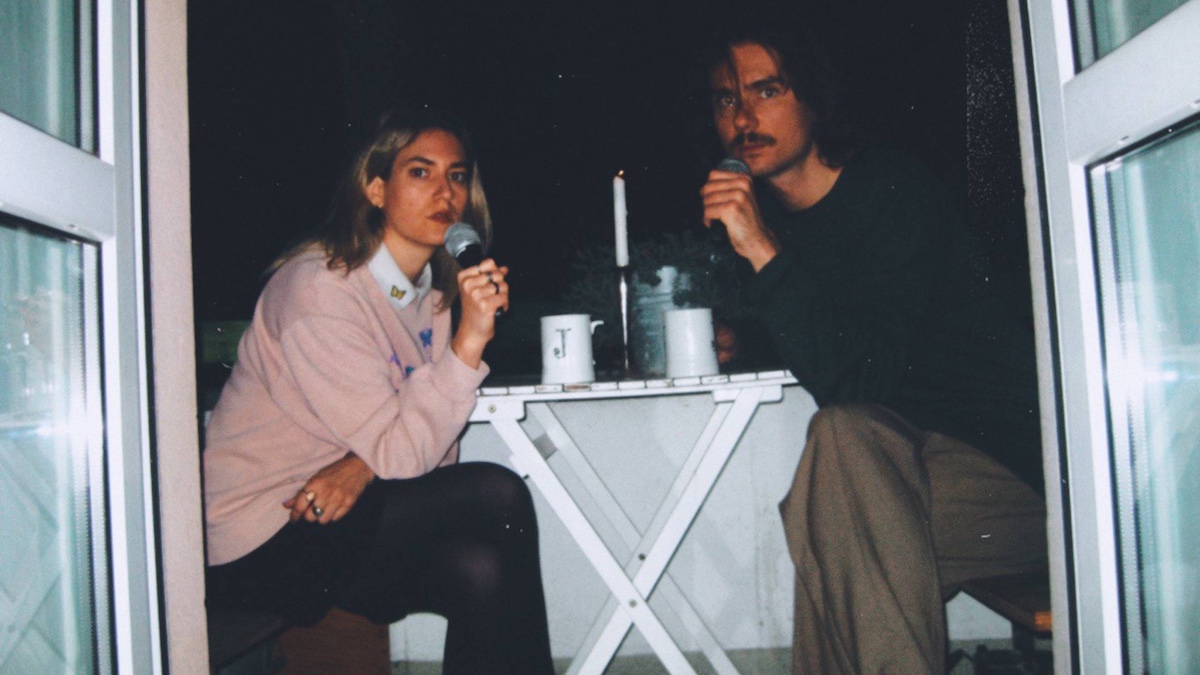
Despite existing in my head under a label of “Cannons but more low-key’, even I realise that this is doing Tokyo Tea Room a disservice. Their new album Feel Forever is a complete joy, full of bouncy, rubbery basslines and plenty of yearning. I’m off to see them in Bristol in a few weeks, and I expect I’ll have a bloody good time.
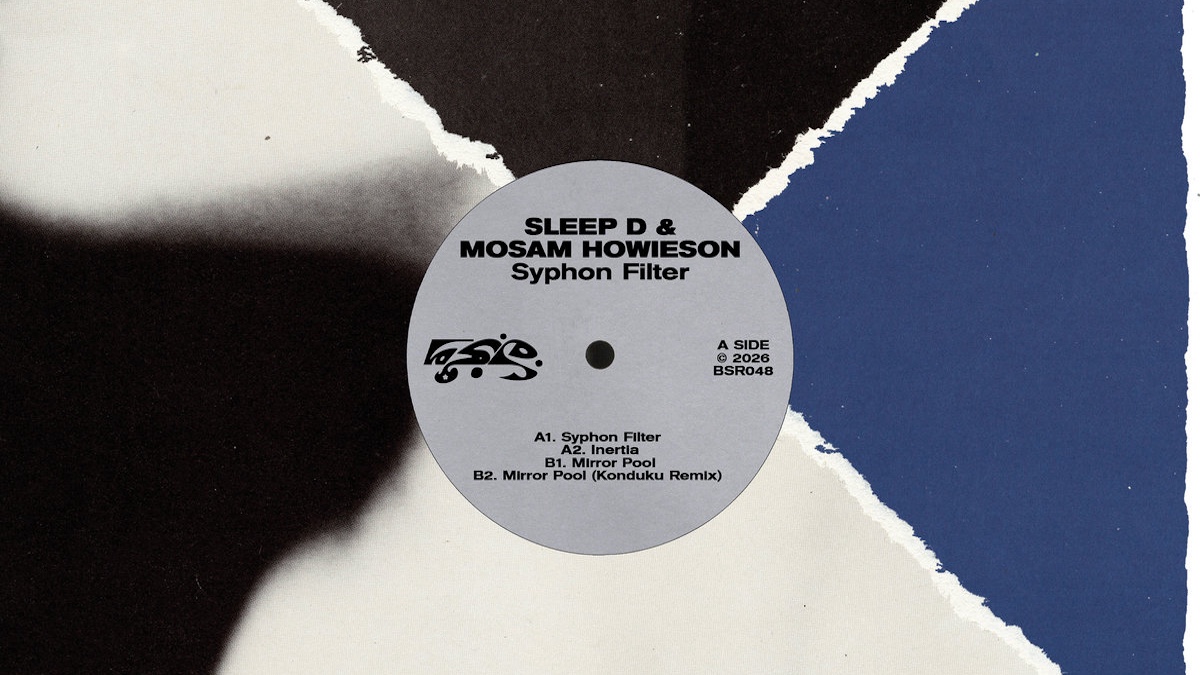
Sleep D and Mosam Howieson join forces for an EP that sits between peak-time bangers and deep hypnotic terrain, with Intetia my pick of the bunch thanks to its Barker-esque melodic synthline and the fact that the breakdown reminds me of 00s prog.
I’m off to Bristol to see Nation of Language tonight, and I haven’t been looking forward to a gig this much in quite a while.
They’ve become one of my favourite bands over the last few years, and I’ve had Ian Devaney on the One Track Mind series for this blog along the way. With four albums now to their name, I went looking to see how other people had ranked them, couldn’t really find anything, and so decided I might as well do it myself!
Nation of Language themselves came together in Brooklyn around Ian Devaney, Aidan Noell and, eventually, bassist Alex MacKay, although the project stretches back to Devaney experimenting with synths after years playing in guitar bands, apparently sparked in part by rediscovering OMD’s Electricity, a song his dad used to play in the car when he was growing up. Their debut didn’t arrive until 2020, by which point they’d spent years gradually putting the record together around day jobs, and since then they’ve grown from a relatively small Brooklyn synth-pop band into something much bigger, while still retaining that slightly homespun quality that made those early songs so appealing.
This is, obviously, entirely subjective, and given how much I love at least three of these records, probably liable to change.
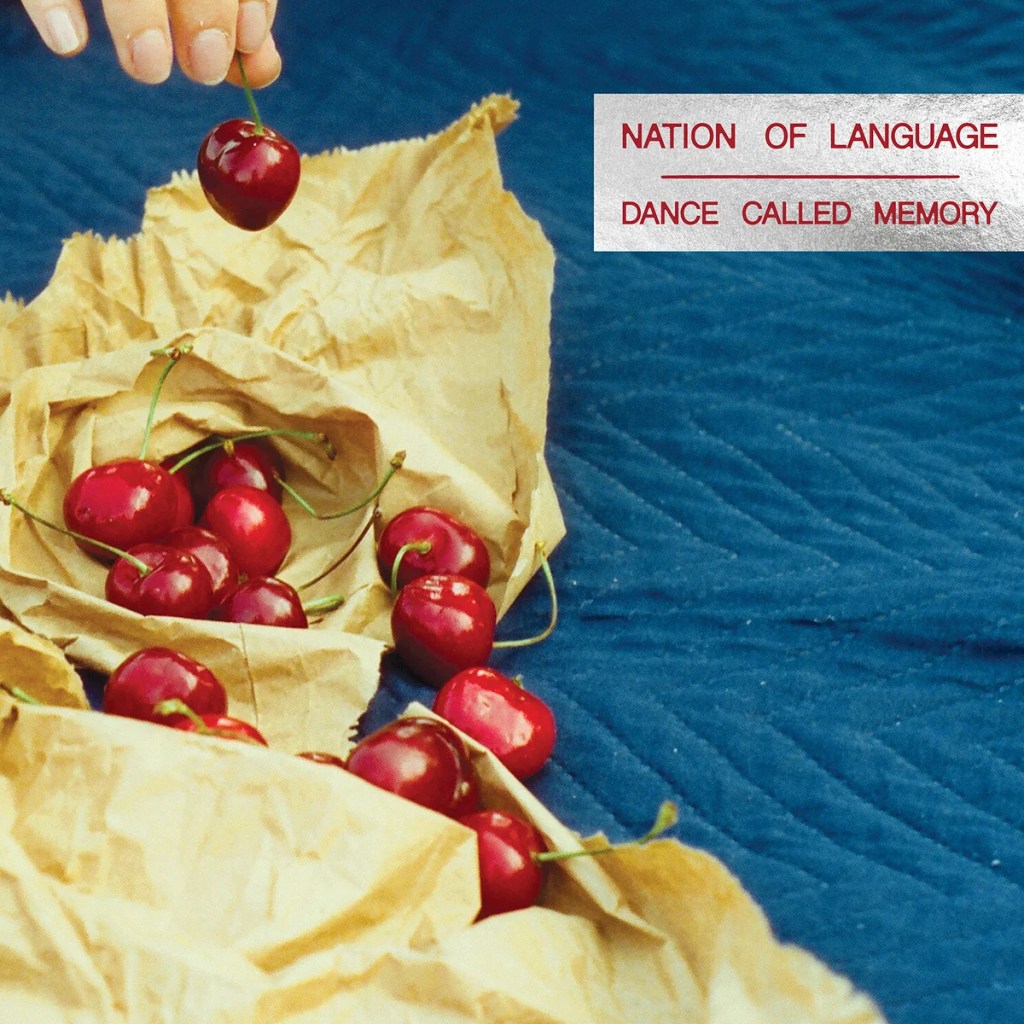
#4 – Dance Called Memory
Perhaps it’s still too early to properly judge Dance Called Memory, which has only been around for a year, but so far it’s comfortably the Nation of Language album I’ve connected with least.
It starts strongly with the emotional scene-setting of Can’t Face Another One, but after that I find myself drifting through a few too many songs and melodies that don’t quite stick, before it really hits its stride again with Under the Water and In Your Head, both wonderfully poignant, lush pieces of music that remind me why I love this band so much in the first place.
Interestingly, Devaney wrote much of the album by sitting around playing guitar when he was feeling low, while he and returning producer Nick Millhiser also deliberately tried to introduce unfamiliar instruments and processes into the studio, including the Moog DFAM percussion synth. There’s a looseness to the result that I can appreciate, even if I’m not sure it always works for me.
It’s certainly not a bad album, and I may end up eating these words, but right now it’s perhaps the only Nation of Language record I wouldn’t call essential.
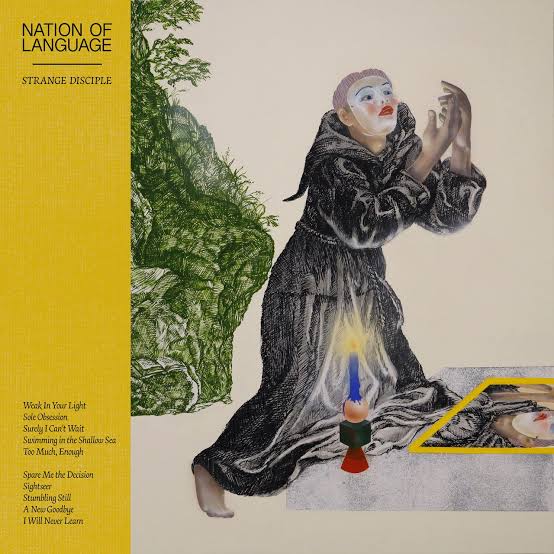
#3 – Strange Disciple
Strange Disciple was a real slow burner for me, and when it first came out I didn’t connect with it anything like as much as I had with the first two albums, although over time it has gradually worked its way in.
Weak In Your Light and Sole Obsession are both distinctive openers, Stumbling Still is another favourite, and I like that there’s a slightly rougher quality to the record, something that perhaps makes sense given the way it was made with Nick Millhiser, using analogue synths, printing tracks to tape and deliberately resisting the temptation to endlessly perfect every detail.
For me though, it’s an album defined by one song, because A New Goodbye might just be the best thing they’ve ever made, and is certainly the Nation of Language song I feel most deeply.
It’s the build that gets me, beginning so innocuously and then gradually gathering weight until those jittering, arpeggiated backing vocals appear in the final quarter and, pretty much without fail, I’m a puddle.
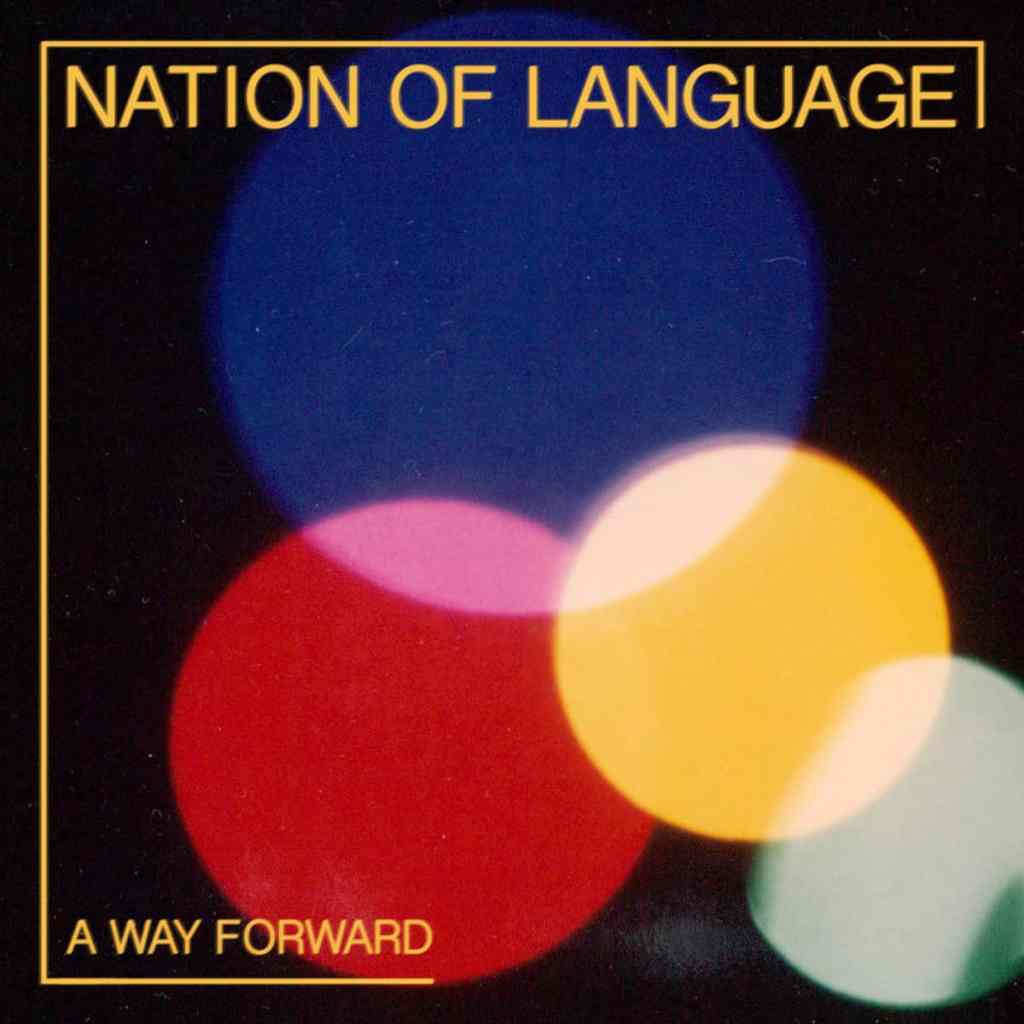
#2 – A Way Forward
It’s a very close-run thing between the top two, but their second album comes in at number two.
There’s just so much here that I love: the kinetic bass and soaring vocals of Across That Fine Line, the lovesick melodrama of Wounds of Love, the celestial atmosphere of The Grey Commute, and then the heartbreaking grandeur of A Word & A Wave.
It also feels like the point where Nation of Language started looking a little further beyond the early-’80s synth-pop that had informed the debut, with Devaney deliberately digging backwards into Kraftwerk, krautrock and earlier electronic music, including Laurie Spiegel, while production was split between debut producer Abe Seiferth and Nick Millhiser.
I think it’s a stunning record and, depending on when you ask me, very nearly their best, but unfortunately they started so strongly that there can really only be one at number one.
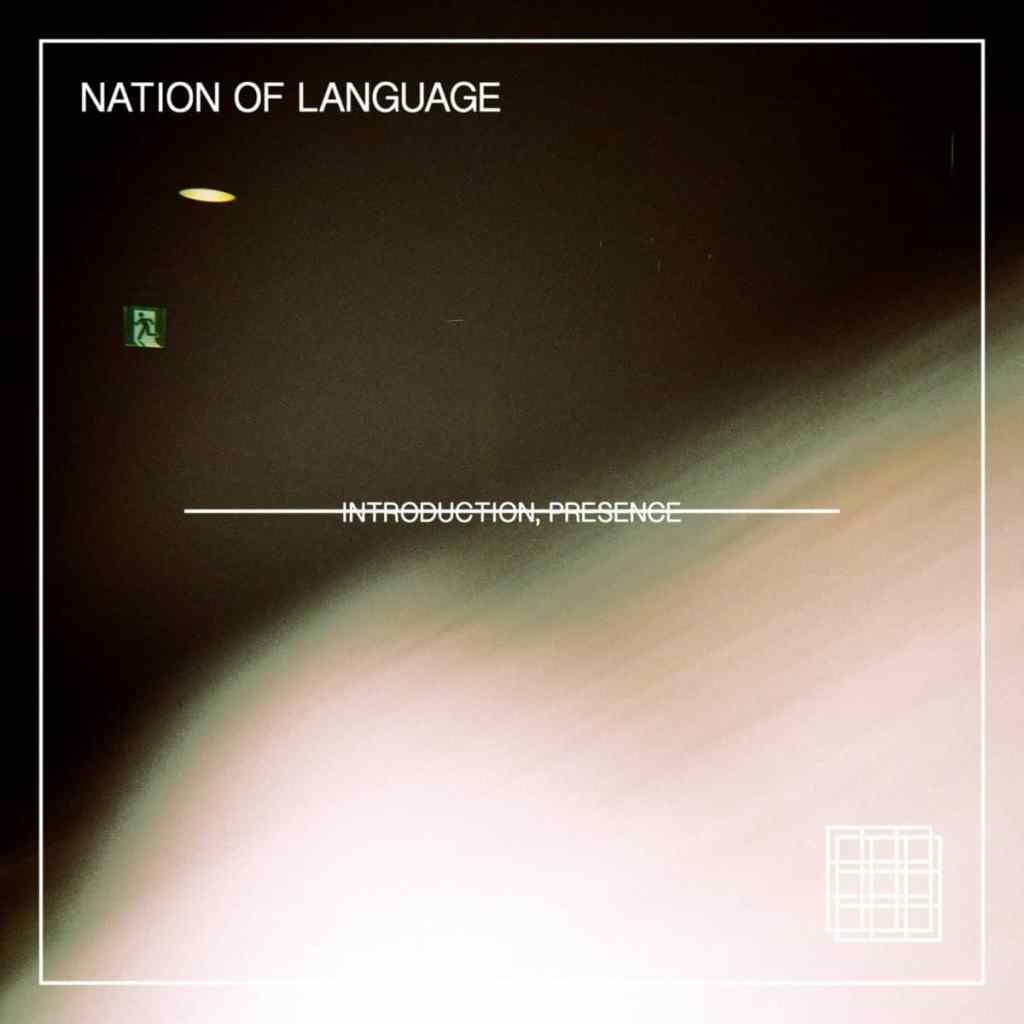
#1 – Introduction, Presence
I’m not sure there has ever been a more appropriately titled debut album, because Introduction, Presence really did feel like that for me, the visceral thrill of suddenly finding a band that seemed to contain so many of the things I already loved about music, but somehow put them together in a way that felt completely their own.
There’s a nice story behind it too, with Devaney and Aidan Noell essentially making the album whenever they could afford another studio session, working café, restaurant and nannying jobs in between, and eventually asking people to contribute towards finishing it instead of buying them wedding presents.
But mostly it’s the songs. Tournament is such a perfect opener, while September Again remains one of their most emotionally affecting pieces of storytelling, with Devaney’s vocal becoming increasingly desperate as it unfolds.
Then there’s Friend Machine, which for me remains the high-water mark of their stripped-down, ’80s-evoking production, before the crowning glory of The Motorist, which seems to stretch out forever and somehow still never feels long enough.
I can’t think of many debut albums that have had quite the same impact on me. Nostalgia, electronics, yearning, melancholy, big melodies and that strange sensation of music making you feel as though you’re remembering something you haven’t actually experienced.
If Nation of Language are new to you, this is where I’d start.
I’m on on holiday tomorrow and blog posts are not going to be a major part of my itenirary, so I’m leaving you with this bucolic delight from Patricia Wolf. Yarrow is part of Music To Watch Seeds Grow By’s collection, marking the label’s ninth release and the third of Season Two, with each of the tracks acting as reflections on the life cycle of plants and their dynamic ecological relationships.
I’m biased of course I as pretty much love everything that 36 does, but I do think that even among a discography of almost pathological prolificness and quality, his latest album stands out as one of his very best.
Hardcore, Static: Pirate Transmissions From The North Of England, 1990-1994 is Dennis’s celebration of a unique period in the UK’s musical history, when primitive pirate stations run by enthusiastic kids delivered a continuous stream of experimental sounds to Bradford, Leeds, and the surrounding towns of West Yorkshire. Spread across four expansive tracks blending fragments of ambient, drone, jungle, uk hardcore and peppered with the spectral voices of long forgotten pirate DJs, the result is utterly compelling.
Chicago songwriter Tasha returns with her fourth album You Are Spring! which lands today and follows 2024’s All This and So Much More. The new LP continues her move towards a broader, more expansive sound while retaining the intimacy that has long defined her songwriting. Among the highlights is Clarion, a gently drifting folk-pop track inspired by repeated journeys between Chicago and New York and named after a small Pennsylvania town passed along the way. Like much of the album, it explores ideas of movement, change and finding a sense of home in unfamiliar places.
Occasionally ambient can suffer from a distinct lack of low-end, making it feel almost entirely weightless. Often that’s the point: who doesn’t like drifting away from the world to a higher plane from time to time. Appleblim’s new album for quiet details, Liminal Tides, for all its soft synth washes and ephemeral moments, is anchored by the kind of heft you’d expect from one of bass music’s most celebrated artists, and is all the more impactful as a result.
Usually when couples break up, they don’t decide to write an album together. But in this case, I’m very glad JJ Weihl aka Discovery Zone and John Moods did exactly that. Dreaming for Miles is a collection of songs that were written over the past ten years or so and recorded between their basement practice space and at their home in Berlin. After spending over a decade living together and playing music together, their lives pulled them in different directions, but during the process of separation, they decided to make a final record together. The result is reflective, often deeply sad, but also somewhat hopeful; a beautiful, poignant distillation of two singular artists saying goodbye to one another.
The ambient artist on the arresting simplicity of a song by Myriam Gendron
The premise of One Track Mind is pretty simple: I ask artists to pick one track that means a lot to them – either something they’ve discovered recently, something that’s been with them for years, or one that reminds them of a specific time in their life or career – and tell me what makes it so special to them. I get to talk to the artists I love, and they get to talk about the artists they love. Love all round!
Brad Deschamps, recording as anthéne, is a Canadian ambient composer whose work leans into stillness, tone and emotional weight. His music draws on soft drones, field recordings and minimal melodic fragments to build pieces that feel immersive without becoming overworked, with releases across labels such as Home Normal, Whitelabrecs and Past Inside the Present.
His latest release is a collaborative album with Alessio Bertuzzi aka Far Away Nebraska, great plains, which leans heavily into the ‘country ambient’ aesthetic, and has been a daily source of morning calm for me over the past several weeks.
For his One Track Mind, Brad has picked out a deeply meditative song from a celebrated Canadian musician and songwriter.
anthéne on Myriam Gendron – Solace
“Though I’m constantly seeking out and listening to new music, when I think of the last decade or so there are a few artists that really stick out as being extremely important to me. Myriam Gendron is one of them. Her discography is all so amazing, but this song “Solace” from Not So Deep As a Well is one that I return to very often. The guitar playing bares a passing similarity to another song I almost chose for this, “Sleepwalker” by Julie Byrne, (another one of those artists whose work I’ve spent a lot of time with in the last 10 years or so).
“The combination of her beautiful guitar playing and the words of Dorothy Parker is really arresting, and it’s also just a very novel idea to set Dorothy’s poetry to music. To me the song/poem seems to be about grief, letting yourself feel sadness and not trying to hastily move on:
There was a rose that faded young; I saw its shattered beauty hung Upon a broken stem. I heard them say, “What need to care With roses budding everywhere?” I did not answer them.
There was a bird, brought down to die; They said, “A hundred fill the sky- What reason to be sad?” There was a girl, whose lover fled; I did not wait, the while they said, “There’s many another lad.”
“Having seen her perform live a few times, her music on record and in person feels very warm and inviting despite being so minimal and somewhat somber, and I take great comfort in it. Perhaps most inspiring is this song is from Myriam’s first album, recorded alone in her apartment with no prior knowledge of sound engineering, and to have composed and recorded something this beautiful is really something.”
anthéne & Far Away Nebraska – great plains is out now on Home Normal