In 2018 Sam Barker released his Debiasing EP and pretty much changed the techno game. He wasn’t the first to do away with kick drums, but with Look How Hard I’ve Tried especially he demonstrated just how powerful restraint could be. His recently announced second album Stochastic Drift now sees Barker creating tracks with a fresh deftness and by “letting go of expectations”, and the first single Reframing is fucking magnificent, although if I was being super critical I reckon it could be at least twice as long. Roll on April.
The opening track from Oklou’s new album choke enough is pitch-perfect: icy, sparse beats, billowing melodies and her hushed, gently autotuned vocal. It will have a hard job to surpass her exceptional debut Galore, but signs are good so far.
“It is a constant and newfound and likely lifelong journey to stay in touch with myself”
Brooklyn-based singer-songwriter Camille Schmidt has quickly carved out a space for herself in the indie-folk world with her raw, introspective songwriting. Her debut EP, Good Person, released in June last year, introduced her deeply personal storytelling, exploring themes of shame and perfectionism with an acoustic, intimate sound.
Since then, Schmidt has expanded her sonic palette, embracing elements of punk and synth-pop on her excellent debut full-length album, Nude #9, which arrived last month.
In her interview for TPW, Camille reflects on the shift in her musical style, the personal experiences that shaped Nude #9, the challenges of navigating vulnerability in songwriting, the pitfalls about writing about people you know, and the awkward conversations that follow.
The themes on Nude #9 span everything from queer identity to mental health and familial relationships. How did you navigate balancing such deeply personal topics without feeling overwhelmed or overly exposed in the process?
Oh yeah yeah great question. I felt more exposed when I originally wrote the songs, when the people close to me were hearing some of my thoughts and experiences for the first time. That felt scary. But the experiences themselves, most of them I had processed pretty fully before writing about them. And I will say that the songs are, yes, very personal, but there was a lot that I intentionally did not include: verses I took out, songs I didn’t put on the album because they were too personal to have out in the world.
“My recent work is about the potential for transformation, finding or creating a space for that to take place.“
As Pefkin, Gayle Brogan crafts slow-burning, devotional soundscapes that feel less composed than conjured – ritualistic folk hymns steeped in the rhythms of landscape and seasonal shift. Also known for her work in Burd Ellen, Greenshank, and Meadowsilver, Brogan’s solo output exists in a more liminal space, where drone, voice, and texture dissolve into something elemental.
Her latest album, The Rescoring, was written in the autumn of 2023, as she prepared to uproot from Glasgow to Sheffield. Its three longform pieces map the psychic and physical contours of change. Working with a deliberately restricted toolkit – synth, voice, and viola, an instrument she had never played before – Brogan embraced immediacy, layering each track in a single take.
Each composition functions as a kind of sonic sigil: one piece reflects on the land she left behind, another on the place she was moving to, and the final track, Change, contemplates transformation itself. The result is a record that doesn’t just document transition but enacts it, lingering in the fertile instability between past and future.
What drew you to the viola as an instrument for this album, especially as it was your first time playing it?
I can answer that in two words – John Cale. I’ve played violin since I was 7 but always focused on the lower end of that instrument, and more recently manipulating that sound by pitch-shifting it down. It’s obviously similar to play but you need to extend your fingers more. I love all the scratch and scrape sounds, and the viola just does it better. I suspect cello does it even better but that’s more of a workout for the fingers and wouldn’t fit in my car!.
Stroom favorites Voice Actor team up with Squu for their second album, Lust (1), blending ambient dance, electro-dub, and trip-hop into 14 hypnotic tracks. Following previous LPs Fake Sleep and the mammoth Sent From My Telephone which spanned a frankly ridiculous 3+ hours, this release feels somehow sharper yet simultaneously dreamy, with soft textures, shimmering vocals, and hazy lyrics that float effortlessly, with the ambient dancehall vibe of dYn an early highlight.
Brooklyn-based Camille Schmidt’s debut album Nude #9 came out last week, and it’s a real mix of genres that I still haven’t quite formed a concrete opinion about. For lots of its runtime it’s fairly traditional singer-songwriter, indie-folk, but then on tracks like Proton Electron Photon it swerves fairly hard into weirdly disquieting electronica. So a mixed bag, but definitely an interesting one.
The first solo project from Alan Sparkhawk, formerly of Low, was always going to be difficult. Following the death of his wife and bandmate Mimi Parker in 2022, Sparkhawk hasn’t been absent as such, still recording with his son and playing the occasional live show, but his new album, White Roses, My God is certainly his fullest musical statement since Parker’s death. And a surprising one it is, with Sparkhawk going full Kayne, albeit thankfully only in musical rather than political direction, with heavily autotuned vocals stretched over stripped-back, electro-ish arrangements. Brother is the only track that features any guitar at all – which will probably upset Low purists – and benefits from the additional texture that brings. But at this stage I think he’s earned the right to do whatever he wants.
“We get lots of inspiration from the natural world: its quietness, rhythms and beauty”
Mary Lattimore and Walt McClements are two of contemporary music’s most renowned innovators. Lattimore’s inventive harp processing and looping has brought the instrument to a new audience and her prolific run of celestial solo albums and evocative film scores have redefined the instrument in the modern consciousness. Her genre-agnostic collaborations include work with Kurt Vile, Steve Gunn, Jeff Zeigler, Meg Baird, Bill Fay and Thurston Moore.
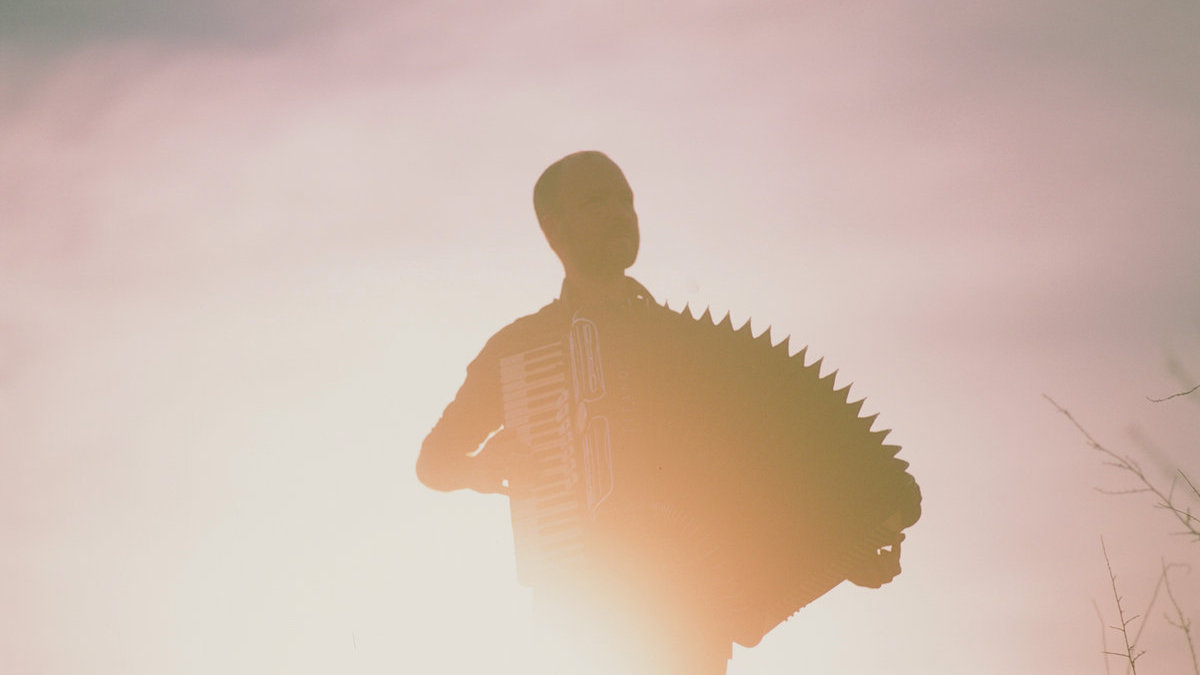
McClements, who tours as a member of Weyes Blood, is an acclaimed composer in his own right, sculpting glacial atmospherics from the accordion.
Recorded in the cozy setting of McClements’ apartment during a rainy December in LA, their new collaborative LP Rain on the Road unfurls as a series of sonic vignettes, rolling landscapes hewn from longform improvisations for harp and accordion. Embellished with additional instrumentation such as the shimmering constellations of hand bells on “Stolen Bells” that glisten like lights on wet pavement, or the stately piano figures on “The Top of Thomas Street”; their pastoral pieces manage to paint vivid images.
Currently in the middle of an extensive European tour, I was very happy they agreed to have a chat about the album, the origins of their collaborations and why Spotify sucks.
When did you first meet, and how long did it take for you to decide that you wanted to work together on music?
Walt – We met in 2017 when we were both playing a festival with the same band. I feel like we became friends then and did some collaboration here and there, Mary played some harp on an old project of mine’s record. But maybe not until the pandemic did we start to connect more musically. I had started making more instrumental ambient/drone work, and Mary was a big influence and supporter. I played on her porch when she started hosting socially distanced outdoor shows, and then we went on tour together in 2021, and I started to sit in on a few songs at the end of Mary’s set, which was so fun, and that led to the idea of making a record together.
Mary – We both grew up in North Carolina and turns out we attended some of the same shows. This collaboration and friendship feels meant-to-be. I’m a big fan of Walt’s ear and aesthetic and sonic curiosity, so it was natural to ask him to sit in when we were on tour together. It feels like a really organic way of getting to know someone, personality and musical sensibility and instincts going hand-in-hand.
RIP summer! It was fun while it lasted, but we’re done with you, and with the first Friday of Autumn we can welcome a load of interesting new album releases. Top of the pile is Pale Jay’s Low End Love Songs, possibly my most anticipated album of the year and which starts with the most glorious opening track I’ve heard in ages. Plus, it’s just in time for my birthday! Thanks, Jay. ❤
“The story of my life doesn’t exist. Does not exist. There’s never any center to it. No path, no line. There are great spaces where you pretend there used to be someone, but it’s not true, there was no one. I started to write in surroundings that drove me to reticence. Writing, for those people, was still something moral. Nowadays it often seems writing is nothing at all. Sometimes I realize that if writing isn’t, all things, all contraries confounded, a quest for vanity and void, it’s nothing.”