
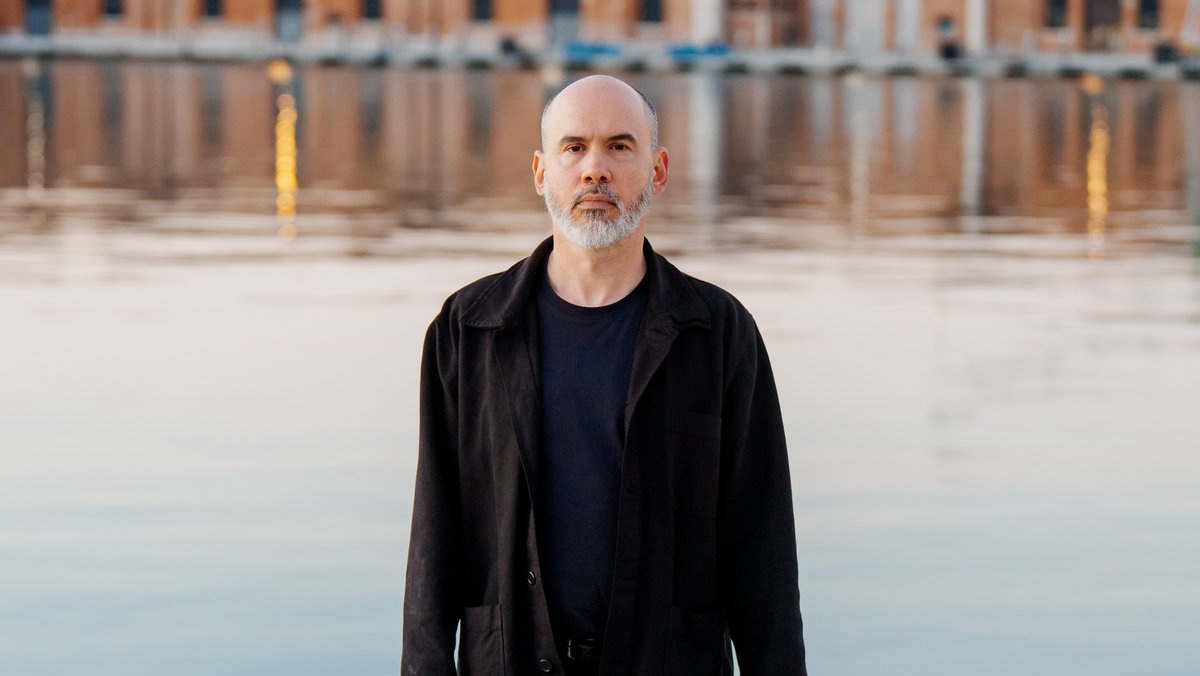
Trance has spent much of the past two decades trying to recover from its own enormous popularity, although artists like TPW favourite 36 have long recognised that its euphoric melodies and shameless emotional excesses are worth preserving. French composer Maxime Denuc takes these qualities somewhere rather unexpected on Club Imperiale, one of my favourite albums of 2026.
Named after a long-closed nightclub on the Tuscan coast, the album was composed using a MIDI-controlled pipe organ at St. Antonius Church in Düsseldorf, where Denuc spent much of a year working between religious services. Following his acclaimed 2022 album Nachthorn, it’s a fascinating exploration of early trance, sacred music and imagined Mediterranean nostalgia, with the church’s extraordinary acoustics playing an essential role.
Opener ‘Hallucinogen’ references Simon Posford’s psychedelic trance classic ‘LSD’, while elsewhere familiar arpeggios and sentimental chord progressions dissolve into vast, beautiful passages of sound. There’s something deeply affecting about the whole record, particularly its sense of longing for an era and a place that exist largely in Denuc’s imagination.
I spoke to Maxime about trance’s complicated reputation, the peculiarities of composing inside churches, nostalgia for experiences we’ve never had and why experimental music could occasionally benefit from being a little less concerned with good taste.
Your new album opens with Hallucinogen and Atlantis, tracks that I would describe as fitting in what seems to be an expanding genre of “what if trance but without the drums”? I’ve always found it interesting how trance went from being associated with genuinely adventurous electronic music to something of a dirty word in certain circles. Why do you think it lost that credibility, and are we finally getting past that?
Trance has often been dismissed, perhaps because of how euphoric it is, and its melodies and harmonies being seen as simplistic. But I think above all that its huge popular success ended up discrediting it: from music for Ibiza burnouts, it became music made to be played in stadiums and events halls, in front of a clean-cut, orderly crowd.
Personally, I’ve loved it for a long time. Even though I’ve moved through experimental music scenes for years, my popular music culture has always been central: I grew up in a house where there wasn’t much music, apart from French variété and whatever I listened to on the radio as a teenager. You could already hear it in Plapla Pinky, the duo I had with Raphaël Hénard, in which we used lots of references drawn from popular music, references that were easier to embrace as two. On Club Imperiale, I found the confidence to finally embrace those references on my own.
As for the renewed interest in trance, I think it follows the same path as techno or house: people realised that the most interesting forms of these genres often come from their early days, when the technology was more basic and the genres weren’t yet fixed. Mid-1990s trance had a real power to express human passions, and when you strip away the ornaments that date it, you see the beauty of certain harmonies and the links it can sometimes have with minimalist music, for example. In a world where we look for ever more intense emotions, it’s hard to completely ignore the genre.
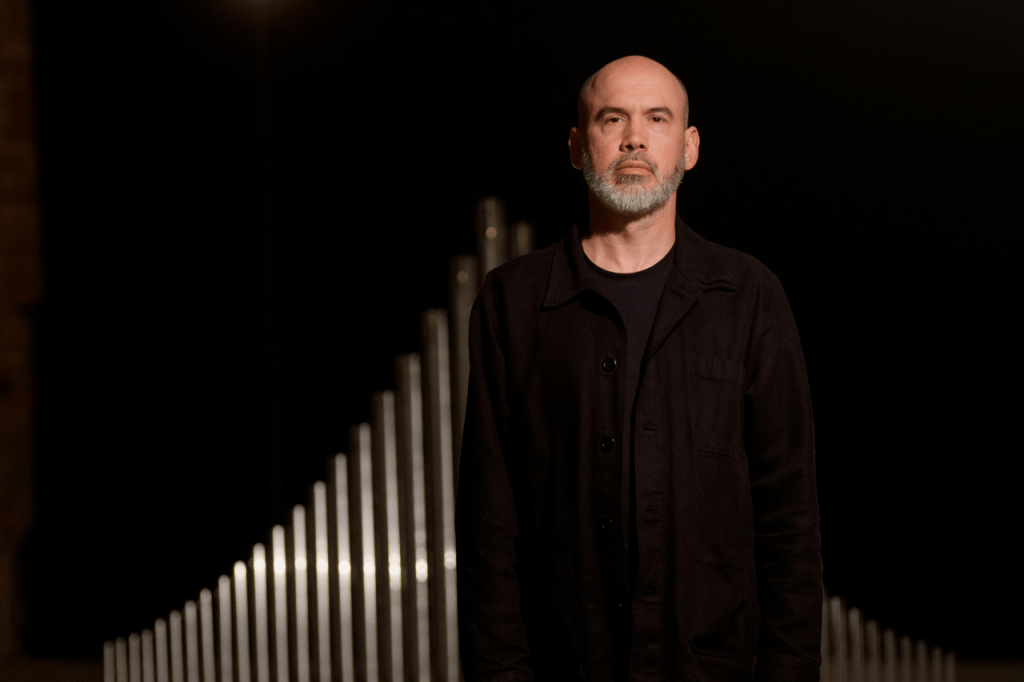
Club Imperiale imagines a world where Catholicism and early ’90s rave culture somehow became intertwined. How much of that is pure fantasy, and how much do you think the two cultures genuinely have in common?
My work doesn’t try to bring Catholicism and rave culture together. The church is present because I work on organs, but I’m an atheist and my relationship with these places is purely about the instrument. Of course you can find points in common between rave culture and the church, always more or less the same ones, which journalists love to dive into (the mass / the rave, the priest / the DJ). But for me, a church is above all a big acoustic box. I’ve spent so much time inside these buildings that I no longer see the religious signs at all. It’s simply the space in which the instrument that inspires me most is located.
As for the idea of making music influenced by trance, it came mostly from the organ at Sankt Antonius church, which had plenty of features suited to it: its precise attacks made it possible to play fast, rhythmically intricate music, which seems a bit counter-intuitive for organ, and to apply the genre’s compositional methods, like fast arpeggios or the trance gate. Its sound, both very powerful and very gentle, also encouraged me to make this music.
If the record tells a story, it’s that of a stroll across a Mediterranean island, where emotions shift with the course of the day and the landscapes. As in most of my work, the common thread is tiredness and the feeling of the after-party.
I’ve always been fascinated by music that can trigger nostalgia for something you never actually experienced. Do you think it’s possible to feel a genuine emotional connection to an era or place that exists largely in your imagination?
Yes, absolutely, and that idea is at the heart of the record. I’ve never been to Ibiza, but the image of a Mediterranean island stayed with me throughout the composition: the record’s dramaturgy imagines a stroll through its different places and landscapes. The same goes for the effervescence of trance in the mid-1990s, which I didn’t experience first-hand because I was too young.
But when you watch the videos of Club Imperiale, this legendary club on the Tuscan coast that inspired the record (you can easily find them on YouTube), you get the impression that in the mid-1990s the party was much freer. Of course, it probably needs some nuance, because the images only show part of reality, and it’s hard to know what really went on there. But they move me for what they show of the electronic culture of the time. The music seems less polished, wilder, and the crowd more diverse. I get the feeling that there was a freedom and a spontaneity then that have perhaps partly been lost since. It’s probably an idealised vision, but it fully fed the imaginary world of the record.
You’ve spent a considerable amount of time working inside churches. Has that experience changed how you feel about religion itself, or have you managed to keep the spiritual and musical sides of those spaces separate?
My view hasn’t really changed, and even though I work in places that evoke the sacred, it’s not the first word I’d use to describe my work. What I did find, though, at Sankt Antonius church in Düsseldorf, was a very particular kind of welcome: the church gave me great freedom, thanks above all to the cantor Markus Hinz. I could work continuously for long hours and refine my compositions with great precision. It bothered me a little at times, because worshippers would come in to pray throughout the day. Markus Hinz always reassured me, saying it didn’t disturb anyone and that my music was good for prayer. That positive attitude really encouraged my research and allowed me to push the work on the instrument further.
I’m interested in the decision to reference Simon Posford’s ‘LSD’ on ‘Hallucinogen’. Of all the records from that period, what made that one stand out? And are there other perhaps less “respectable” ’90s records you have a soft spot for?
The choice of LSD by Hallucinogen was more musical than conceptual. At the beginning, my first composition exercises consisted of transcribing trance hooks and phrases on the organ of Sankt Antonius church, to see how the instrument reacted to these fast phrasings. I did it with several tracks I liked, and the Hallucinogen one proved particularly inspiring. I quickly started adding elements on top, trying to make something different out of it. At that point, I didn’t really know who Simon Posford was, or how important he was in that scene. So it was above all the track itself, and the way it worked on the organ, that guided me.
More generally, the tracks from that period that move me are often those built on very emotional chord progressions. I’m thinking in particular of Café del Mar by Energy 52, Le Voie le Soleil by Subliminal Cuts, or, in a more mainstream register, 9 PM (Till I Come) by ATB and Saltwater by Chicane. I also like certain productions by Tiësto, Ferry Corsten or Armin van Buuren, which are more geared towards being played in stadiums, but which I still appreciate.
Many electronic producers spend years looking for ways to make their music sound bigger, often through increasingly elaborate studio technology. You’ve effectively hired a centuries-old building to do some of that work for you. Has working with natural acoustics changed how you think about electronic production?
It’s even more radical than that: working in an acoustic context has gradually moved me away from electronic production. Since I discovered the possibility of controlling an acoustic instrument with my computer and MIDI, it seems very hard to go back, because this way of composing gives me very strong emotions. And conversely, I no longer really enjoy listening to synthesizers on the small monitoring speakers in my studio. I sincerely hope that will come back, but for now it’s quite difficult.
I like working within a restricted framework: the organ lets you do an enormous amount, but not everything you want, and that limit feeds my creativity. By contrast, the ever-expanding possibilities of electronic production, and the sheer number of tools available, make me feel dizzy.
One thing I love about early trance and IDM is how completely unembarrassed it was about being emotional, sometimes to the point of absurdity. Do you think contemporary experimental music can be a little too concerned with being tasteful or intellectually respectable?
Yes, perhaps. On Nachthorn, I used more neutral ideas, probably less aesthetically risky. But on Club Imperiale, I clearly want to push the harmonic writing further, and to own what I love even more. I also had to find an angle that would let me tell something different with the same instrument. Even though the response to the record has been very positive overall, I sensed a slight reserve from the most intellectual fringe of my audience, who perhaps feel it goes too far.
I don’t know how I’ll see this record in ten or twenty years: maybe I’ll think I completely got it wrong. But I think it’s essential to take risks when you consider you’re making experimental music, which isn’t always the case, I find. Academic contemporary music, for example, still largely uses a language that dates from after the Second World War. And even in some alternative scenes that call themselves experimental, you sometimes find a language that takes fairly few risks, makes us hear again what we already know, and sits within a certain consensus.
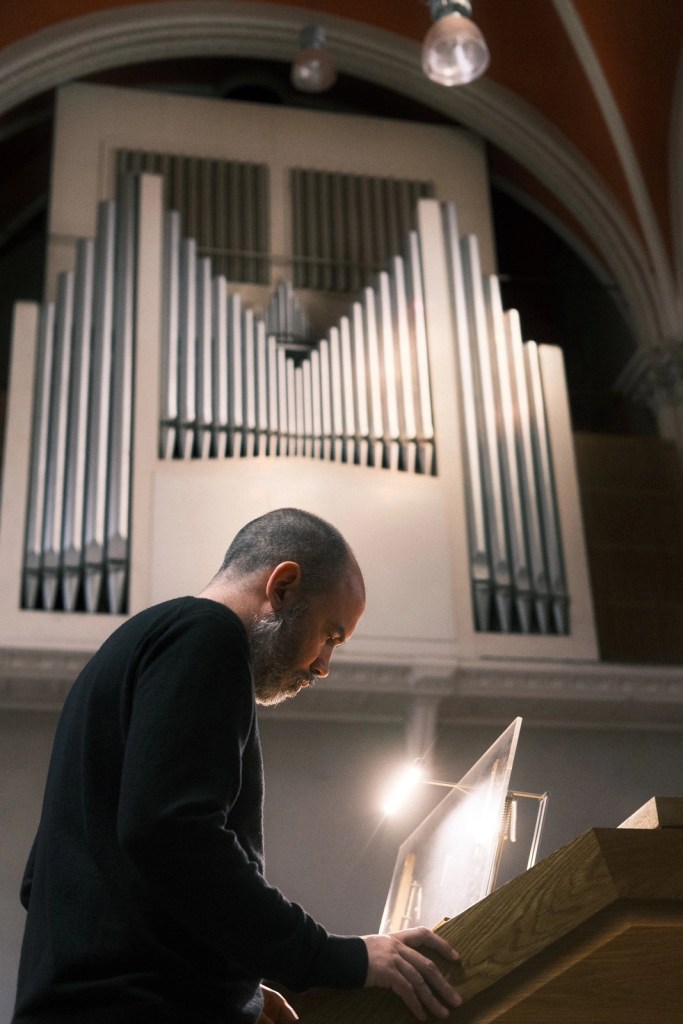
I’ve read that you spent months returning to the same church, essentially working office hours around its religious services. Did the romance of the project ever wear off? I imagine there must have been days when the last thing you wanted to hear was another organ.
There are days when I’m fed up with organs: with the logistics this work demands (finding a church that will agree to host me, arriving early to prepare the organ before a concert) and also with its rather ascetic side. You often spend nights alone in churches, on a very hard bench, sometimes in the cold…
But every time I find myself in the church, in front of the instrument, I take great pleasure in working with this setup, often in superb places. I also love those long solitary face-to-faces with the instrument. And the audience’s enthusiasm at concerts often lifts me up and gives me the energy to keep going.
There’s a slightly melancholy quality to much of Club Imperiale. Do you find that the memories of a great night out can become more emotionally significant than the actual experience itself?
Yes, melancholy is always present in my work, and particularly on Club Imperiale. As I said earlier, the things that inspire me aren’t necessarily things I’ve lived through; rather, they feed into the story I tell myself. And I believe the story we tell ourselves can become more powerful than what we actually experienced. On a strictly musical level, the simple harmonies of early trance are still very evocative for me, and the emotions they convey aren’t always easy to decipher: they can blend, within the same musical motif, joy and sadness, melancholy and hope. These aren’t feelings you can sum up simply: you’re often somewhere in between, and I like it when people feel that while listening to my tracks.

