Sometimes all you need to start the day right is a nice, fried slice of deep, dubby house; so here’s Mammo serving up the goods. Taken from his new album Lateral which clocks in at an intimidating 99 minutes, but is well worth your time if you’re into stripped back techno, sketchy ambient and a few things in between.
Apparently at Joshua Idehen’s live shows he strongly encourages you to turn to your neighbour and give them a hug / some show of love, which means I’ll probably never see him perform. This song is great though! And his entire album is pretty fun and positive – I just want to listen to it in solitude, without having to interact with other people, thanks very much. I also just found out that he was in Benin City who did some interesting stuff a while back, which has made me like him ever more.
K-Lone’s new LP sorry i thought you were someone else – his debut release on Incienso – was produced after his father’s passing and became a place for the Brighton-based artist to escape and reflect. And while the majority of the album isn’t necessarily something I’ll be going back to, the opening track someone else is inarguably lovely.
I was slightly obsessed with Smallville about 15 years ago, so it’s comforting to know that not much has changed in terms of the music they’re putting out in the intervening years. Margaux Gazur’s new LP Blurred Memories is dusty, low-key, slightly eeire, hypnotic house and I can’t get enough of its opening track.
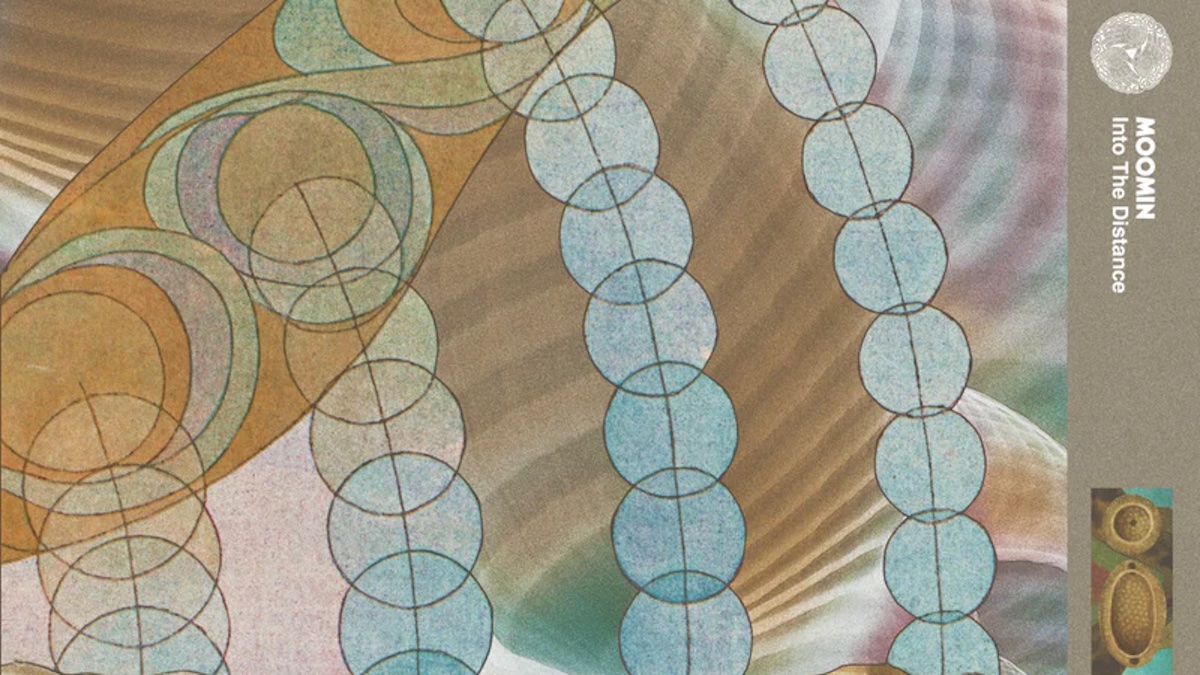
I really like it when artists I haven’t thought about for years pop back up with something brilliant. I was mildly obsessed with Moomin in The Story Of You era, which terrifyingly was 15 years ago. Lots has changed for me in that time, but it’s reassuring to know he’s been making pretty much the same music; namely dusty, lofi house with plaintive piano lines and samples of waves gently rolling onto the shore. Joni is actually a bit of a outlier as he ventures into more expansive breaks, but that lead synth line really is pretty special.
“We get lots of inspiration from the natural world: its quietness, rhythms and beauty”
Mary Lattimore and Walt McClements are two of contemporary music’s most renowned innovators. Lattimore’s inventive harp processing and looping has brought the instrument to a new audience and her prolific run of celestial solo albums and evocative film scores have redefined the instrument in the modern consciousness. Her genre-agnostic collaborations include work with Kurt Vile, Steve Gunn, Jeff Zeigler, Meg Baird, Bill Fay and Thurston Moore.
McClements, who tours as a member of Weyes Blood, is an acclaimed composer in his own right, sculpting glacial atmospherics from the accordion.
Recorded in the cozy setting of McClements’ apartment during a rainy December in LA, their new collaborative LP Rain on the Road unfurls as a series of sonic vignettes, rolling landscapes hewn from longform improvisations for harp and accordion. Embellished with additional instrumentation such as the shimmering constellations of hand bells on “Stolen Bells” that glisten like lights on wet pavement, or the stately piano figures on “The Top of Thomas Street”; their pastoral pieces manage to paint vivid images.
Currently in the middle of an extensive European tour, I was very happy they agreed to have a chat about the album, the origins of their collaborations and why Spotify sucks.
When did you first meet, and how long did it take for you to decide that you wanted to work together on music?
Walt – We met in 2017 when we were both playing a festival with the same band. I feel like we became friends then and did some collaboration here and there, Mary played some harp on an old project of mine’s record. But maybe not until the pandemic did we start to connect more musically. I had started making more instrumental ambient/drone work, and Mary was a big influence and supporter. I played on her porch when she started hosting socially distanced outdoor shows, and then we went on tour together in 2021, and I started to sit in on a few songs at the end of Mary’s set, which was so fun, and that led to the idea of making a record together.
Mary – We both grew up in North Carolina and turns out we attended some of the same shows. This collaboration and friendship feels meant-to-be. I’m a big fan of Walt’s ear and aesthetic and sonic curiosity, so it was natural to ask him to sit in when we were on tour together. It feels like a really organic way of getting to know someone, personality and musical sensibility and instincts going hand-in-hand.
“The story of my life doesn’t exist. Does not exist. There’s never any center to it. No path, no line. There are great spaces where you pretend there used to be someone, but it’s not true, there was no one. I started to write in surroundings that drove me to reticence. Writing, for those people, was still something moral. Nowadays it often seems writing is nothing at all. Sometimes I realize that if writing isn’t, all things, all contraries confounded, a quest for vanity and void, it’s nothing.”
“Music is such an abstract listening form, your mind needs to fill in gaps“
“Sabrina Spellman was mixing dope beats in the other realm, which she recorded onto her inherited heirloom tape machine, made with her carboot-sale drum machines and charity-shop synthesizers” So runs the legend and origin story of DJ Sabrina the Teenage DJ, the anonymous producer with a penchant for warping 90s samples into nostalgia-rich, tearjerking electronic music.
Several albums, hundreds of tracks and a 1975 collaboration later, her latest LP Destiny arrived earlier this year in all its 4 hour + running time glory. One of the most innovative and original electronic artists to emerge in the last few years, I was very pleased to welcome her to TPW for a chat…
To start off I’d like to ask something I hope you don’t take the wrong way – what on earth possessed you to release a four hour album?
Well, I wanted to beat Charmed’s length cause everyone prefers the longer albums (they’re more popular among listeners) compared to the shorter albums (they’re less popular among listeners) and I wanted to find a way to supplant Charmed as it was still very popular even after three albums released since lol! I also had a lot of songs finished and they all worked too well for me to cut them (I think I only cut two songs eventually from the album).
“Don’t judge a book by its cover” etc, but in my experience definitely do judge an album by its cover. Or at least give it a listen. There is literally nothing about the cover of Precipitation’s new album Glass Horizon (or the artist name, or the title for that matter) that suggests I won’t completely love it. And I do! Kinda house, kinda ambient, 100% lush. Sundown in Orgi comes in like Laurent Garnier’s Last Tribute to the 21st Century – all sad pads and longing – before skipping happily off on lo-fi broken beats over a squidgy bassline. Aaaaand… melt.






 The Predatory Wasp