
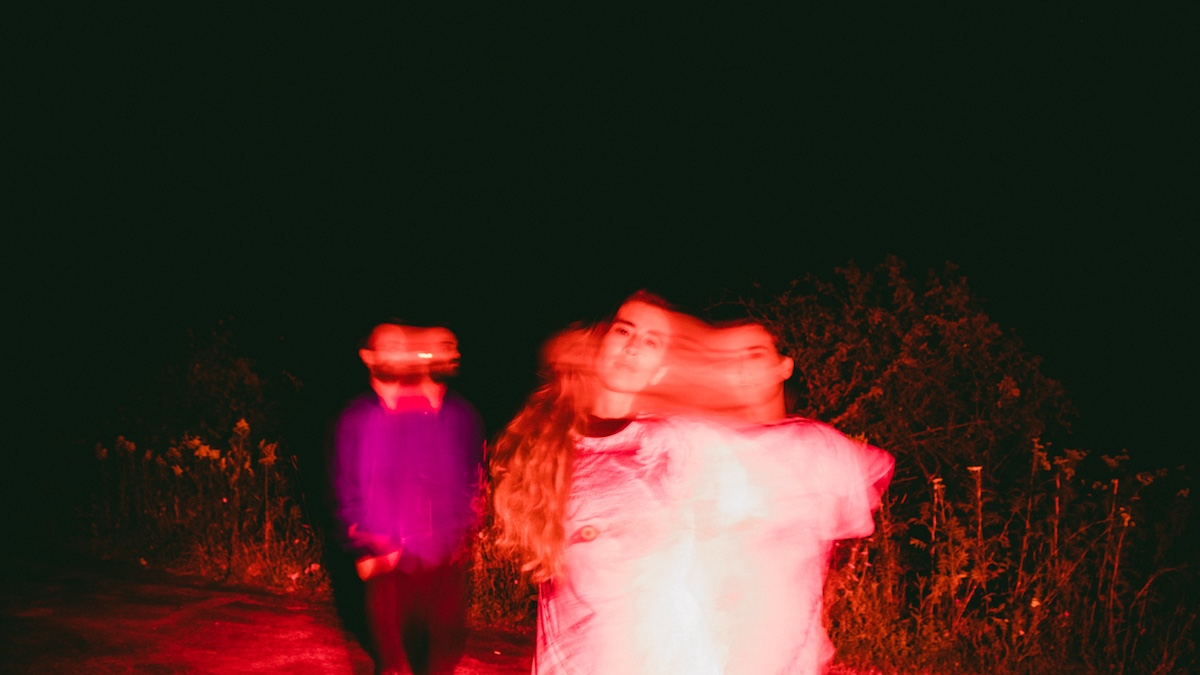
Miyaxx is the musical partnership of Lea Thomas and John Thayer, two musicians based in the Catskills, New York, who have been making music together in various forms for more than a decade. Thomas is a singer, songwriter and guitarist whose solo work draws on folk and experimental rock, while Thayer is a percussionist, producer and sound artist with a particular interest in electronic processing and the natural world. Their debut album, Hold Your Ego Out Like a Sun, was released in September and brings these different approaches together across eleven remarkable tracks.
There’s folk music at its heart, but the record moves freely through ambient, slowcore, psychedelia and experimental electronics. Thomas’s beautiful, often fragile vocals are surrounded by open-tuned guitars, homemade percussion, field recordings and all manner of strange electronic sounds. The arrangements can be incredibly delicate one moment and almost overwhelming the next. As I wrote when I first featured the album on these pages, it’s achingly beautiful. And sad; very sad.
One of my favourite things about discovering new music is coming across an artist I know absolutely nothing about and finding myself completely consumed by their work. That’s happened with Miyaxx. I’ve been listening to this album almost every day since discovering it, and I’m still struggling to articulate quite why it affects me so deeply. At this point, it’s a serious contender for my album of the year.
I spoke to Lea and John about their long creative partnership, their shared love of Talk Talk, making instruments from things found in their garden, and the strange emotional power of music.
You’ve been making music together in various forms for more than a decade, but this is your debut album as Miyaxx. Why did it take so long for this particular project to emerge? Was there a moment when you realised that what you were making together had become something neither of you would have arrived at independently?
John: Over many years of collaboration we’ve learned that it just takes us as long as it takes. We know when something is done but sometimes that can take awhile to fully present itself. This LP was a work in progress before we had a band name or album title. We’d been exploring the “If Only” motif and realized we had stumbled onto a record.
I’m generally much more interested in how music makes me feel than what it’s supposed to mean, and this album has affected me more than almost anything I’ve heard this year. There’s something incredibly intimate about it. Was that intimacy something you consciously tried to capture, or is it simply what happens when two people who know each other this well make music together?
John: Choice of instrument, the manner in which it’s recorded, the intention of the performance, I think all of those things come into play when making music. The intimacy you’re mentioning is certainly the result of it being just the two of us in my studio making music together. It was important for us not to outsource any of the playing, it didn’t matter if one of us didn’t excel at an instrument, it was more important for us to play it than have one of our musician friends step in.
It also was a fun challenge- Lea stepped up to play all of the bass and found some new ways to bring melody in through the low-end that were new for her too.
You’ve mentioned revisiting Talk Talk’s Spirit of Eden while working on “Night Garden”. I’m mildly obsessed with Mark Hollis, so this immediately spoke to me. Were you similarly spending days in a darkened studio agonising over the sound of a single snare drum, or was the process considerably more spontaneous?
John: No laboring over sounds at all actually! We tend to move very quickly in the studio when actually tracking as we both get bored quickly. It’s most important to capture the idea. We were never sure if what we recorded would make the cut, so why obsess. The real experimentation usually arrives after the recording when we manipulate the recordings with outboard processing or software.
“Blue Cloud White Sky” was a cool guitar experiment before it became a fully realized song. “Night Garden” existed as a drum and bass groove before the lyrics arrived. The midpoint switch on that tune where the entire track goes from minor to major was a sculpted experiment based on our obsession with collage techniques used by Talk Talk on Laughing Stock and Spirit of Eden.
I find “Carry Your Love” almost unbearably beautiful. I’ve listened to it repeatedly and still find it difficult to get through without feeling completely overwhelmed. I can’t quite explain why, either. Do you ever have that experience with your own music? And is there another track or album you’ve heard recently that had this effect on you?
Lea: Oh wow, that’s really sweet to hear, it is a tender song. Maybe the river and grasses are calling to you! Maybe it reminded you of something close to your heart that you feel is full of potential.
Music makes me cry all the time, if you’re asking. Just the other day, we were randomly watching a live performance by Charles Bradley on YouTube and it just cut right through me.
I usually write songs from certain experiences or for certain people including myself, so sometimes- more often live than in the studio- those emotions can come up while I’m performing. Sometimes, certain sounds show up in the creative process that feel like gifts- like the chuggy low-end whale sounds in “Stones Remember Rain” – and whenever I hear them, they just really light me up, like being with an old friend.
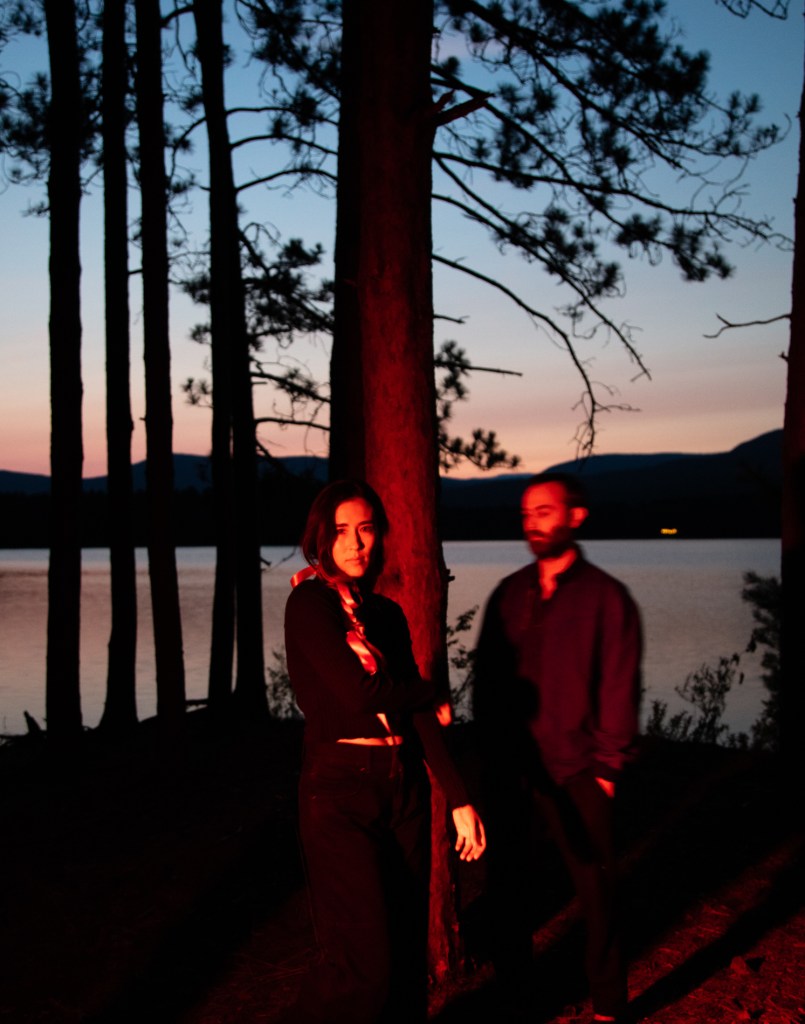
Lea, your solo work has a very distinct identity, while John brings a background in percussion, production and electronic experimentation. On this album, those different approaches seem almost impossible to separate. How do you negotiate creative disagreements? Or were there none?
Lea: We work from a place of finding what we’re both excited about- it’s never much of a struggle to orient towards that feeling. I can be a bit stubborn if I don’t like an idea, but that’s ok because I’m often right, ha! Just kidding. We just trust each other’s processes and taste, and we have a lot of shared musical experiences between us- having made music together since way back when we were the new kids in town going to audio engineering school in NYC.
John has always had a kind of incredible stamina when it comes to being in the studio. He basically lives in front of the speakers- he’s a relentless explorer. I, on the other hand, am a person who needs to take many breaks, make a snack, go do other things, let my mind wander- that’s often where lyrics or melodies find me. Sometimes, hearing the song from another room, as John’s working on it, gives me a different perspective and I’ll get ideas for overdubs or arrangements that way too.
John, I was reading about your earlier album Supermundane, which also seems concerned with our relationship to the natural world. There’s an obvious continuity with Miyaxx, although here those ideas are being explored through Lea’s songwriting as well. How has working together changed the way you approach electronic composition?
John: All my music is inspired by my relationship to the natural world, of which I, like all of humanity, am a part. With instrumental music the opportunity to infuse the work with language arrives in the form of titles. I try to be very conscious of bringing the listener into a specific place through the names of my albums and tracks. Generally I stay away from anything too electronic-sounding when working on Lea’s solo music but with Miyaxx it’s an opportunity to push folk music into new sonic territory. I tend to make a lot of my own percussion instruments whether they be shakers made of grass from our garden or drums we make ourselves. I’ll then process those organic elements through my modular rig.
“The Shape You Make Returning” is one of the album’s strangest moments, with this huge mass of distortion surrounding an almost ghostly vocal. You originally recorded it early in the process, then returned to it after performing it in Japan. What wasn’t quite right about the first version?
John: “TSYMR” borrows from the same musical theme as “If Only,” just filtered through the lens of a few fuzz pedals. I’m a firm believer that taking a song to the stage will yield feedback you’ll never get just tinkering in the studio. The Japan tour forced us to really come up with a narrative structure for the tune, something we could repeat each night but also adjust to the vibe of the venue and audience. Lea was also getting comfortable with her guitar effects and taking up new space sonically. When we listened to the studio version once we got back from tour it just didn’t hit like the live version so we just set up while the tune was still fresh in our mind and played it live together in the studio.
I love the fact that you’ve used recordings of birds, storms, summer nights and even homemade percussion from your garden. There’s something appealingly DIY about that, particularly when those sounds are sitting alongside some pretty sophisticated electronic processing. Do you spend a lot of time actively hunting for interesting sounds, or is it more a case of hearing something outside, grabbing a recorder and seeing where it takes you?
John: It’s an endless pursuit of the hippest sound. In terms of field recording, I’ve learned over the years that if it’s happening now, it’s happening now- so always be ready. Many times I’ve thought, oh I’ll come back and record that sound, only to be disappointed by the change in the wind, or the time of the day. In terms of making our own percussion instruments, it just gives us something completely unique to our lives and the spaces we move through, and I find that notion particularly attractive in a world where people are just sourcing their sounds from the same sample libraries and DAW’s. I’m very bored by that method of production.
There’s a recurring guitar melody that appears in different forms throughout the album, eventually returning on the closing track, “What Gathers At Dawn”, in a much simpler arrangement. Was that circular structure planned from the beginning?
Lea: This motif is what started the whole project for us. The melody had been bouncing around in my personal archive, in various forms for years, and it never wanted to become a more ‘traditional’ song, but I really loved the emotional quality it carried for me. So we used it as the starting point for our experimentation- what if we played it on acoustic, or on 12-string, or with fuzz, or with auto tune, or slowed way down, etc. I like that it weaves through the album in a way that feels maybe haunting or maybe just nicely familiar by the end- the way that certain feelings or experiences will show up in your life over and over again, in different forms.
After spending so long making this album, and putting so much of yourselves into it, what has it been like finally letting it go? Has the experience changed how you think about making music together, or what you might want to explore next?
John: This record is a proof of concept LP. Now that we’ve built the world the project lives in, it’s going to be fun to expand on it even more. We’ve managed to get the live set together in a really satisfying way that honors the record while also giving us the chance to improvise and stretch out. It really feels like we’re just getting started.

