There’s been a gap of six years between Shallow – the last Sea Oleena LP – and Weaving A Basket, which was released last month. So long in fact that I’d forgotten just how brilliant an artist she is. Weaving A Basket, though, may be a late entry for album of the year: it’s certainly one of the most beautiful, with vocals acting like ambient textures rather than narrative or rhythmic devices, often accompanied by little more than a mournfully strummed guitar. It’s honestly hard to describe just how lovely this album is, so probably best just to go and listen to it.
There are only two possible musical routes for an artist name of Craven Faults coupled with artwork as starkly bleak as on Enclosures: screaming, piledriving metal and sinister, meandering electronica. Fortunately (for me at least) this is very much in the latter camp; an intricate, patient and atmospheric three track EP from an artist whose bio is as succinct and evocative as “half-remembered journeys across post-industrial Yorkshire”.
Mark Pritchard is an extraordinary artist making some of the most visionary electronic music you’re likely to hear, ranging from the deeply unsettling and undefinable to blissful, meditative electronica like in My Heart. This is the final track on MP Productions – EP 1: a six track collection revisiting some of the aliases he has released under, and spanning a range of styles but predominantly focused on club music, which I would highly recommend checking out.
I’ve been a big fan of Christian Löffler’s particular strain of electronic music for some time now, especially his 2012 debut A Forest and 2016’s excellent Mare, both of which are considered, completely absorbing bodies of work, mostly consisting of melodic and atmospheric house music that sounds like it’s been teased up from the earth rather than constructed on anything as rigidly mechanical as a synthesiser. For his latest single, Pastoral, he’s done away with the 4/4 structure – and in fact any kind of beats – entirely, instead focussing on the lush interplay of slowly rising strings and muffled piano.
EDIT: On digging a little deeper into this, I just discovered that it’s a reworking of Beethoven, which makes it the second Beethoven cover I’ve covered in a week, but as part of a completely different project. Has Beethoven just come out of copyright? Seems unlikely. Anywhere, here are a few words from the man himself (Christian, not Ludwig):
“Deutsche Grammophon invited me to listen to a number of historic recordings of Beethoven, shellac discs from the 20s. I have reworked four of the composer’s tracks for an upcoming EP called Parallels (Beethoven) and you can listen to the first single ‘Pastoral’ now.”
The second joint production by pianist Sebastian Knauer and the composer Arash Safaian, This Is (Not) Beethoven is an album made up of variations on themes from Ludwig van Beethoven, aiming to modernise the work of the classical musician to mark the 250th anniversary of his birth. More recently, the project was opened up to a number of remixers, among them Matthew Herbert, who provided this epic reworking of Adagietto. Patient, haunting and completely transfixing, it’s an incredible reimagining, and goes to show you really can remix anyone and anything, as long as you do it properly.
This is taken from the new two-track EP from Brooklyn composer and producer Faten Kanaan, and follows the release of the equally brilliant The North Wind last month. Fatan has previously said that much of her work is inspired by cinematic forms, whether that’s sweeping vistas or intimate character studies; both of which are apparent in The Archer, with its dramatic swathes of synths conjuring both ragged forests and Blade Runner-esque cityscapes while simultaneously evoking a deep personal narrative.
The earliest harps were discovered a long old time ago: around 3500BCE. Back then and for years after, they were the instrument de jour, but despite their popularity around the globe for centuries, and depiction in several cultural cornerstones (see: Guinness, Ireland in general), you have to go a little out of your way to find much modern music based around a harp. Mary Lattimore is arguably the most well-known proponent of this unwieldy instrument, and her new album Silver Ladders is engrossing, transportive and gorgeous, with the 10-minute epic Til A Mermaid Drags You Under an intense, occasionally unsettling but completely enthralling highlight.
Over the last decade or so, Canadian producer Khotin – or Dylan Khotin-Foote to his friends – seems to have been slowly deconstructing his own sound, moving from admittedly slightly off-kilter but still structurally recognisable house music, to increasingly stripped-down ambient and psychedelia. His new album Finds You Well is his calmest to date: at time playful, at other solemn, but rarely rising above a gentle murmur. WEM Lagoon Jump tips its cap quite considerably to the influence of Boards Of Canada with its stumbling drums and hazy, wandering, nostalgic synth lines, but nevertheless stands out as a highlight in a beautifully introspective release.
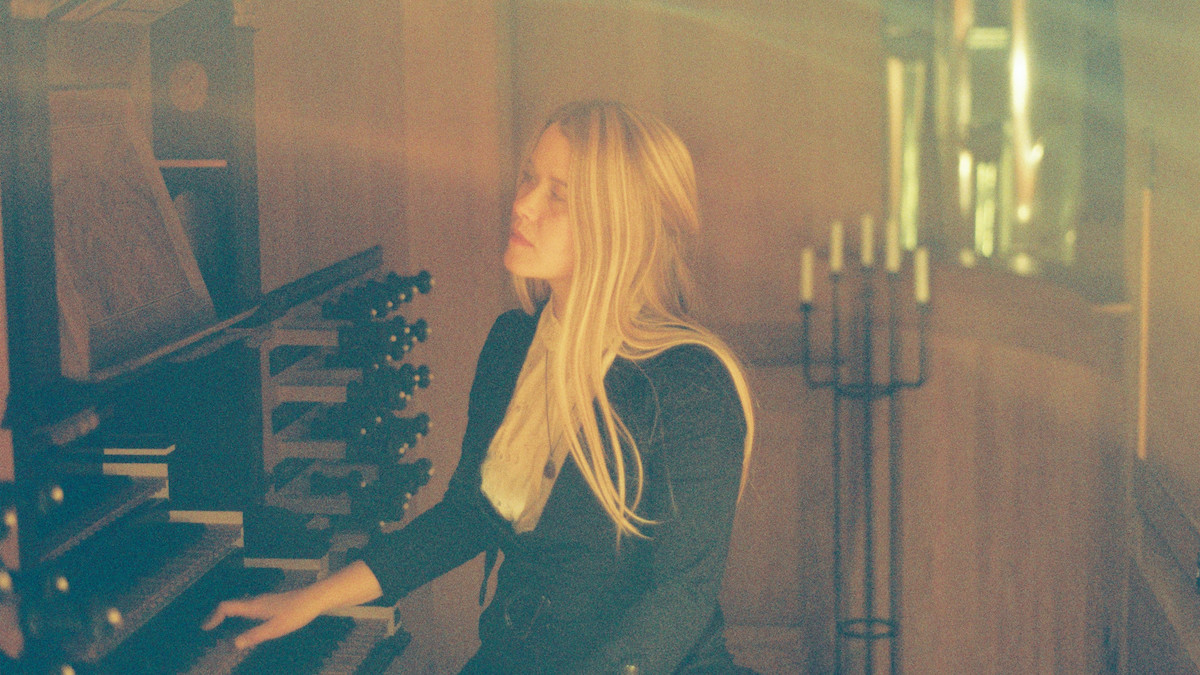
Anna von Hausswolff’s latest album All Thoughts Fly was recorded entirely on a pipe organ in a Gothenburg church, and the results are as baroque and dramatic as you would expect. At times furiously intense, at others calm and reflective, it’s not so much an otherworldly experience as it is a feeling of being catapulted back several hundred years into a dank and earthen past. Outside the Gate (for Bruna) is the final track: a soothingly meditative finale to yet another exceptional body of transportive music.
Chicago’s Sam Prekop is a singer and guitarist in The Sea and Cake – a jazz-inflected indie band that have released 11 studio albums since 1994 – and also puts out his own, highly varied, solo material. The New Last is taken from his latest album, Comma, arguably his most immersive body of work to date: a collection of instrumental electronica that ranges from the meditative to neon-flecked psychedelia. The New Last itself is gorgeous: all brightly glimmering tones and warm pads that softly wrap themselves around you.







 The Predatory Wasp