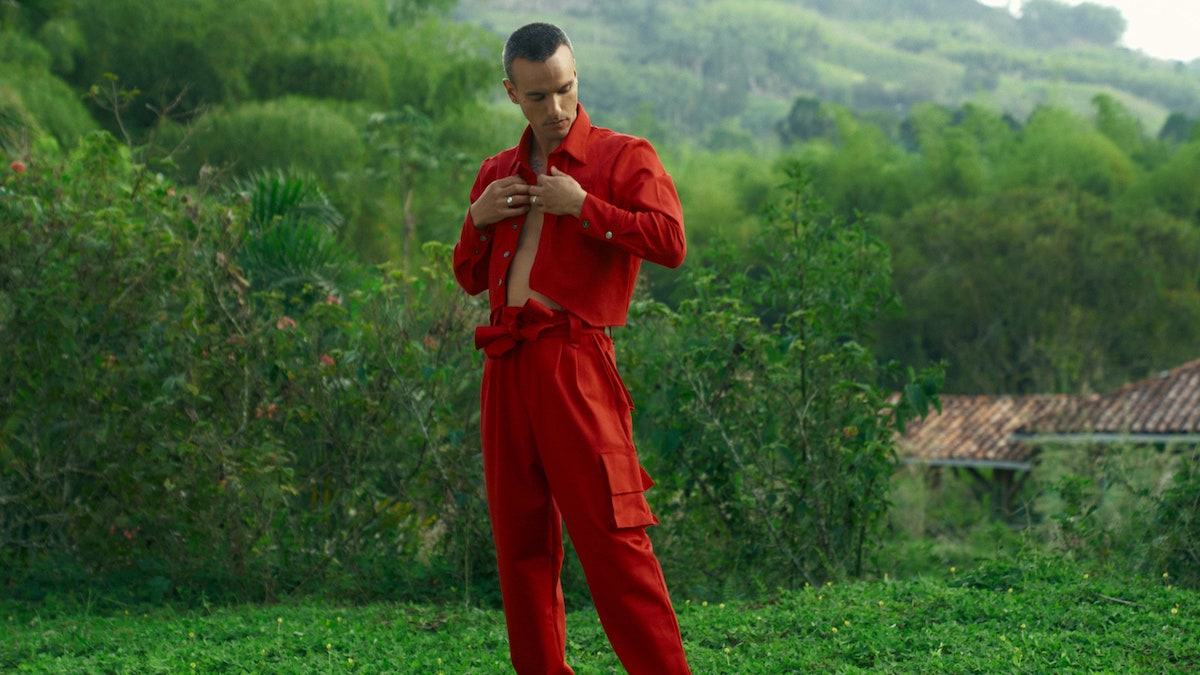
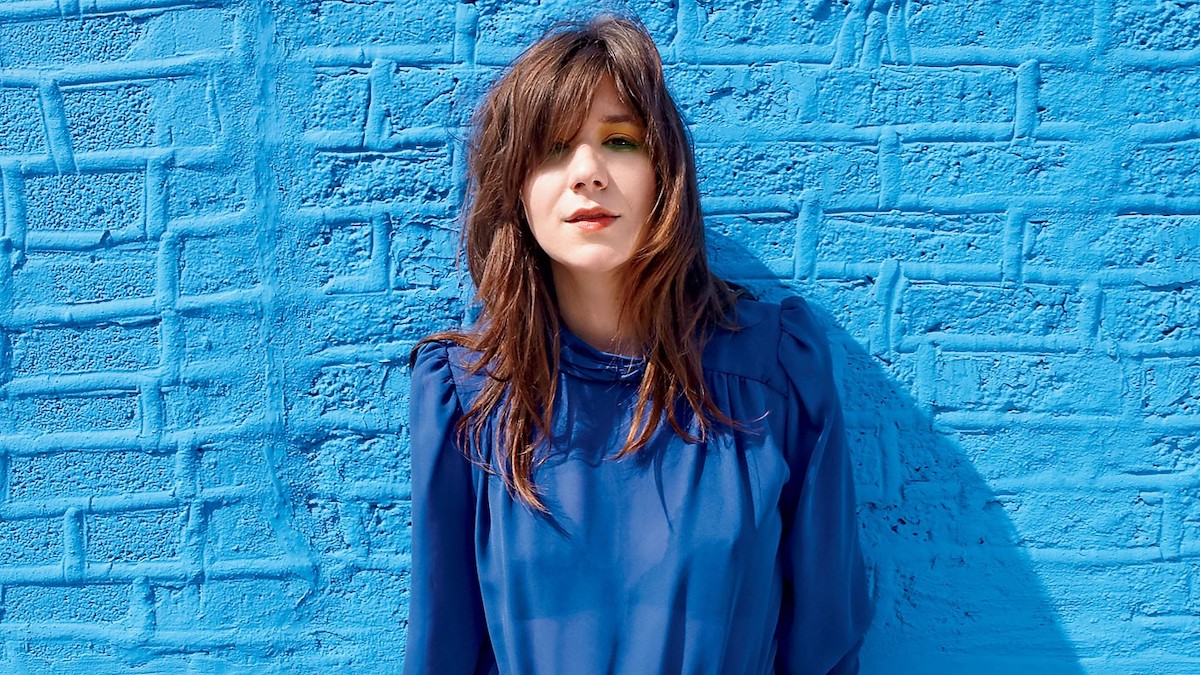
This is taken from Call Super’s excellent new album Every Mouth Teeth Missing. I’ve always found Call Super’s music vaguely intimidating, for reasons I’m not entirely clear about, but whatever the reasons might be this is the first album I’ve got properly stuck into and I’m very glad I did. Pleasure For Pleasure is like two different tracks hammered together: the glitchy, video game-evoking bounce of the main rhythm section and the glassy pads that are occasionally permitted to break through more and more frequently until it all gels together into a satisfying mess of phased drums and white noise.
Lots of you will already be very familiar with The Caretaker and this record – especially as it came out in its final form more than a year ago, and much of it was originally recorded at least a decade before that. If so, please forgive me for delving back into the recent and not so recent past, which is, after all, exactly what Everywhere At The End Of Time is all about.
Probably the best-known alias of Leyland James Kirby, The Caretaker is someone I’ve always thought I would enjoy, but never really gave the proper time and attention – due at least in part to the fact that none of his work ever appears on streaming services. Recently this 6-hour+ epic has become a trend of TikTok, a Quietus article about which made me finally commit an extended listening session.
Everywhere… was released in instalments, each portion of the release representing a different stage of the progression of Alzheimer’s disease until – with the final instalment in 2019 – The Caretaker character died and the moniker was retired. The Caretaker project was initially inspired by the haunted ballroom scene in The Shining, and like many of his albums – and often revisiting and sampling his earlier work – Everywhere… is mainly comprised of treated and manipulated samples of 1930s ballroom recordings, which disintegrate further and more violently into chaos as the album progresses, representing the various stages of memory decline brought about by the disease.
The result is utterly haunting, harrowing, beautiful and existential, and one of the most profound – if at times extremely challenging – experiences you can have listening to music. Will I be making a TikTok video to share my experience? I shall not.
Fields is taken from the new album from Gabriel Garzón-Montano, on which the NYC-based singer, songwriter and multi-instrumentalist presents tracks from three distinct self-created characters (lots more on this in Pitchfork’s glowing review for those who are interested). Fields bears comparisons to to fellow experimental r&b practitioner Moses Sumney, both vocally and its rich, occasionally unsettling production and meandering, unpredictable structure. Both artists are pushing boundaries in intoxicating directions, and Agüita will surely stand up as one of the year’s best (and varied) albums come December.
Formerly known artistically as Youth Lagoon, Trevor Powers has now released two records under his own name, the latest being Capricorn: a sketchy, at times deeply paranoid and at others almost naively beautiful instrumental collection of songs. There’s a tapestraic quality to the album, which is peppered with field recordings and warped, hushed and time-stretched synths, halfway between Blood Orange and The Caretaker. Album closer 2166 is like the entire album compressed into a single track: a poignant piano line, ominous bass notes and something that was probably a vocal once upon a time before it was processed almost beyond all recognition. It’s a really impressive body of work, from an artist that seems to be doing it exactly the way they want.
If you’re not familiar with him, A. G. Cook made his name as the founder and head of PC Music, which is either one of the most groundbreaking labels of the last decade, or an infuriating in-joke that should be erased from history, depending on your point of view. Over the last few years he’s become one of the go-to producers for Charli XCX, and together they’ve made some quite astonishing pop. Acid Anger is taken from his new album 7G (which comes in at a frankly intimidating 49 tracks and 2+ hours) and reminds me quite a lot of Mylo’s Destroy Rock & Roll in its glitchy treatment of vocals, with a dose of glacial Aphex-esque melodies thrown in for good measure.
Quicksails is the recording project of Chicago-based producer and multi-instrumentalist Ben Billington, and Melrose Move is taken from his latest album, Blue Rise. Starting life as a relatively ominous, almost funereal three-note bassline, it quickly transforms into something celestial and expansive; like a fountain of glittering stars shooting upwards from the dank earth before gently fading into hazy-white oblivion.
Closeness is taken from mydata, the fourth album from Australian artist Katie Dey: an intimate electronic album about an ‘internet relationship” in which Dey’s vocals are more often than not partially buried, emerging twisted, hushed and barely audible from beneath layers of winding static, triumphant strings, or whatever other musical textures she’s thrown at the canvas. Closeness is short, barely clocking in over two minutes, but packs a huge punch: a sincere and incredibly moving minimalist ballad.
Becky and the Birds is the solo project of Swedish artist Thea Gustafsson, and someone I first came across via her eponymous 2018 debut EP, which is still one I go back to regulalrly. Paris is taken from her new EP Trasslig, which roughly translates from the Swedish “entangled, messy, intricate”, which neatly sums up the vibe across the seven tracks it contains. As on much of her work, her voice on Paris is extraordinary, hitting high notes that transcend traditional vocals and become strange, eerie textures floating above sparse, otherworldly production.
Control is the final track on Jackie Lynn’s (aka Circuit des Yeux’s Haley Fohr) latest album Jacqueline, and it’s a pretty phenomenal way to wrap up the 30 minutes or so of eclecticism that precedes it. Ranging from electro-inflected punk to soaring, ethereal folk to out-and-out pop, it’s a disorienting experience of being flung from one genre to another without the slightest bit of warning. And then there’s Control, an epic, grandiose finale that’s both fragile and foreboding, and a fitting end to a hugely ambitious release.
I have tried hard to love græ, the new album by Moses Sumney. It’s clearly brilliant, and the scale of it is pretty staggering, but I’ve found it almost overwhelmingly impenetrable on the many occasions I’ve sat down to listen. This is a failing on my part. However, there is a three-track run at the start of the second side of the double LP that is utterly sublime, kicking off with Two Dogs. I just wish I liked the rest of the album as much as these 10 minutes or so. I’m sorry, Moses: I have tried, and been found wanting.